Why Your Spices Taste Stronger in Soup Than in a Dry Rub
Quick Answer: Most spice flavour compounds are fat-soluble, not water-soluble, and many are volatile — they need heat and a medium to be released and carried. In a soup, extended simmering in water plus whatever fat is present extracts steadily over time. In a dry rub, much of the flavour never gets released at all and some burns off. Bloom your spices in fat for 30 to 60 seconds, and the same quantity will taste two or three times stronger.
A tablespoon of cumin transforms a pot of soup.
The same tablespoon on a roast is barely there.
The spice did not change. The delivery system did.
Why does the same spice behave so differently?
Because of what the flavour compounds dissolve in.
Most spice aromatics are fat-soluble. Capsaicin in chilli, curcumin in turmeric, the compounds in cumin, coriander and cardamom — they dissolve in oil far better than in water. A spice sitting in a fat-free environment releases only a fraction of what it contains.
Many are also volatile. They evaporate readily with heat, which is what makes a spice smell wonderful when it hits a hot pan and taste like nothing an hour later if you overdo it.
Water extracts a narrower range. Simmering does pull out some compounds, and time compensates for efficiency. A long soup extracts steadily for an hour; a 20-minute roast does not.
Dry heat drives volatiles off the surface. On a roast, the spice sits on the outside at oven temperature with nothing to dissolve into. The aromatics leave into your kitchen air rather than into the food, which is why the house smells better than the dinner tastes.
Grinding changes the rate too. Ground spice has enormous surface area — it releases fast and burns fast. Whole spice releases slowly and suits long cooking.
Which gives the underlying rule: fat plus moderate heat plus time is the ideal extraction environment. Soup accidentally provides all three. A dry rub provides none of them.
What does blooming actually do?
It solves the problem before the spice reaches the dish.
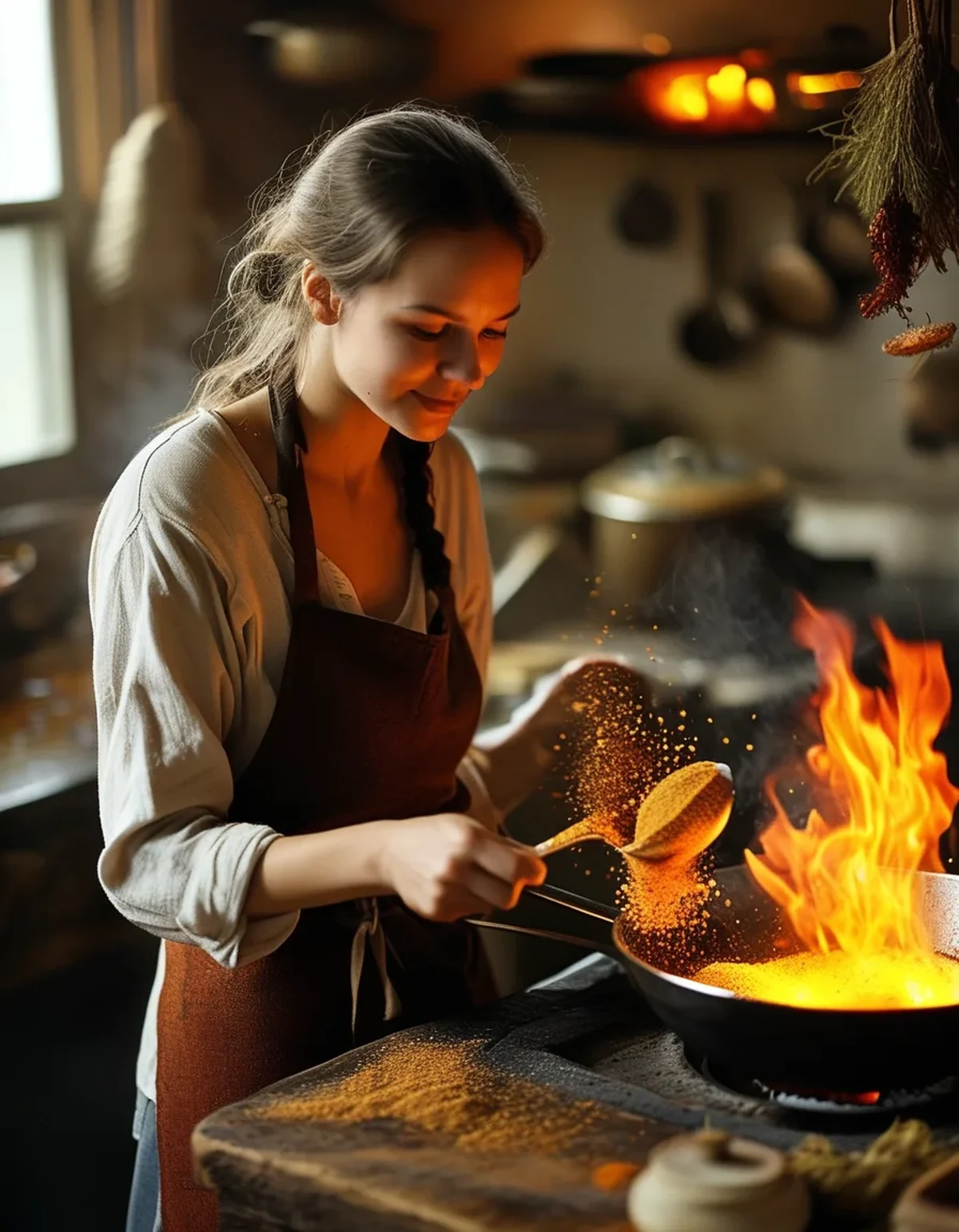
Blooming means heating spices briefly in fat. Warm oil, butter or ghee, spices in, 30 to 60 seconds until fragrant, then continue with the recipe.
It extracts fat-soluble compounds into the oil, which then distributes them evenly through the whole dish rather than leaving them clumped and locked up.
It triggers chemical development. Gentle heat creates new aromatic compounds through Maillard-type reactions, which is why bloomed cumin smells nutty and raw cumin smells dusty.
It removes the raw taste. The chalky, slightly bitter note in under-cooked ground spice is unmistakable once you know it, and blooming eliminates it.
Timing is unforgiving. Ground spices burn in well under a minute at frying temperature. Medium heat, constant movement, and add the next ingredient as soon as it smells right. Burnt spice is irreversibly bitter and there is no rescue.
Order matters in a real pan. Whole spices first, for a minute or two. Then aromatics like onion and garlic. Then ground spices, for 30 seconds only. Then liquid, which stops the cooking immediately.
How should you use spices in different cooking methods?
Six situations, each with a different answer.
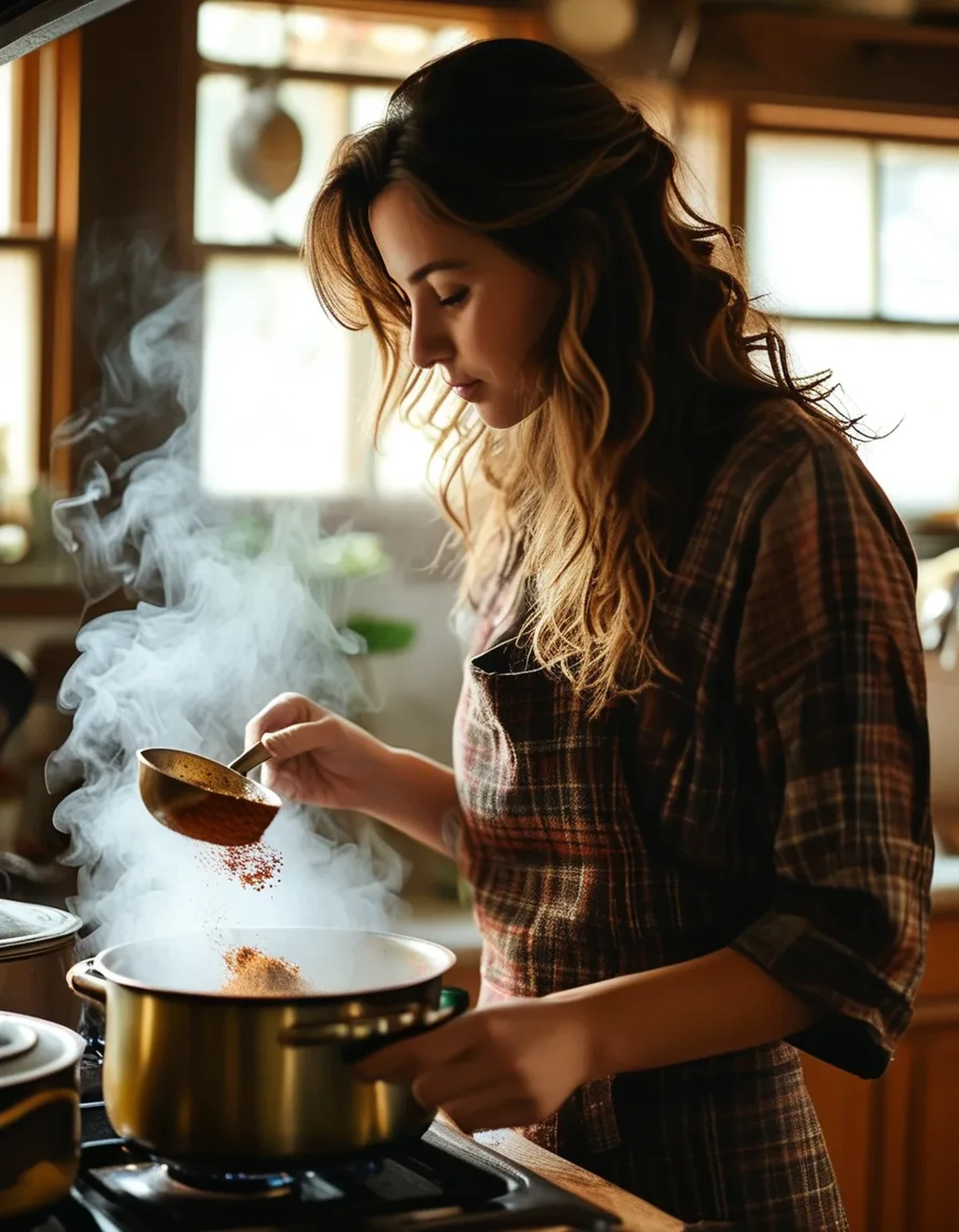
Soups and stews: add ground spices early, bloomed in fat. Sauté aromatics, bloom the spices, then add liquid. Adding spices straight into simmering liquid at the end gives you a fraction of the flavour for the same quantity.
Dry rubs: add oil and rest the meat. A rub mixed with a spoonful of oil, applied and left for at least 30 minutes — ideally overnight — extracts far more than dry powder does. This single change transforms most rub recipes.
Roasting vegetables: toss in oil first, then spice. Oil first means the spice adheres and dissolves rather than scorching directly on hot metal.
Grilling: apply delicate spices after, robust ones before. Direct high heat destroys fine aromatics. Paprika, cumin and coriander can handle the grill; a finishing sprinkle of ground spice after cooking preserves the volatile top notes.
Baking: spices go into the fat or the wet ingredients. Cinnamon in the butter, not in the flour, distributes far more effectively.
Cold applications: bloom separately and cool. For dressings, dips and yoghurt sauces, bloom the spices in a little oil, let it cool, then stir in. Raw ground spice in a cold dip stays gritty and dull.
Seasonal note: as cooking shifts toward braises and roasts in autumn, the same spice quantities that worked in summer grilling will read differently — long wet cooking extracts far more, so a spice blend that was well balanced on a griddle can become overpowering in a stew. Reduce by about a third when moving a blend from fast dry heat to a long braise.
Myth vs Fact: Cooking With Spices
Myth: more spice means more flavour. Fact: badly extracted spice tastes dusty rather than flavourful, and adding more makes the texture worse without adding much taste. Better extraction beats a bigger quantity every time.
Myth: spices last for years in the cupboard. Fact: ground spices lose meaningful aroma in 6 to 12 months; whole spices hold for 2 to 3 years. They do not spoil, they just fade, which is why an old cupboard needs ever-larger quantities.
Myth: you should add spices at the end so they stay fresh. Fact: for most cooking, early blooming extracts far more. Finishing spices are a deliberate technique on top of that, not a replacement.
Myth: toasting and blooming are the same. Fact: toasting is dry heat, usually for whole spices before grinding. Blooming is in fat. Both are useful and they do different jobs.
Myth: pre-ground is just as good if it is fresh. Fact: grinding exposes surface area and volatile loss starts immediately. Whole spices ground as needed are noticeably better, and a cheap electric grinder pays for itself quickly.
Myth: burnt spices just taste toasted. Fact: burnt spice is bitter and irreversible. If your spices darken and smell sharp rather than fragrant, start again — it will not cook out.
Myth: salt is a spice. Fact: it works completely differently. Salt is water-soluble and enhances other flavours rather than adding its own, which is why it needs a different timing logic altogether.
FAQ: Spice Questions, Answered
What is the single biggest improvement I can make?
Bloom ground spices in fat for 30 to 60 seconds before adding liquid. It is the difference between spice that tastes dusty and spice that tastes cooked.
How long do spices actually last?
Ground: 6 to 12 months for good aroma. Whole: 2 to 3 years. Store away from heat, light and the cooker.
Why do my dry rubs taste weak?
No fat and no time. Mix the rub with a spoonful of oil and apply at least 30 minutes ahead, ideally overnight.
How do I know when blooming is done?
By smell. When the aroma turns nutty and fragrant, it is ready — usually 30 to 60 seconds. Add liquid immediately.
What if I burn them?
Start again. Burnt spice is bitter and does not cook out.
Should I toast whole spices before grinding?
Yes, for most. A dry pan, medium heat, until fragrant, then cool before grinding. It makes a substantial difference to cumin, coriander and fennel in particular.
Why does my curry taste better the next day?
Extended time lets fat-soluble compounds continue dissolving into the fat and distributing through the dish. Time does slowly what blooming does quickly.
TL;DR:
- Most spice compounds are fat-soluble and volatile — they need fat, heat and time to come out.
- Soup provides all three by accident; a dry rub provides none.
- Bloom ground spices in fat for 30 to 60 seconds, then add liquid immediately.
- Mix dry rubs with oil and rest them at least 30 minutes.
- Ground spices fade in 6 to 12 months — an old cupboard is why recipes stop working.
Tonight, bloom your spices in the oil before anything else goes in the pan. Same quantity, completely different dish.
Keep Reading
This article is for general informational purposes only and is not medical advice. Always consult a qualified health professional for guidance specific to you.