Why Where You Keep Your Spices Costs More Than What You Paid for Them
Quick Answer: Heat, light, air, and moisture all degrade the volatile oils that carry spice flavour, and the classic rack above the cooker exposes jars to all four. Moving the same spices to a closed drawer or cupboard away from the hob typically doubles their useful life - which is a bigger saving than buying cheaper spices ever was.
You bought good spices. You are not imagining that they tasted better six months ago.
And if the jars live on a rail above the hob, or on a sunny shelf, or in a clear jar on the windowsill, then the storage has cost you more flavour than the difference between a supermarket brand and a specialist one.
Four conditions are doing it, and three of them are easy to fix this afternoon.
What actually degrades a spice?
The flavour in almost every spice comes from volatile aromatic compounds - essential oils held within the plant material. Volatile is the operative word. They evaporate, and they react.
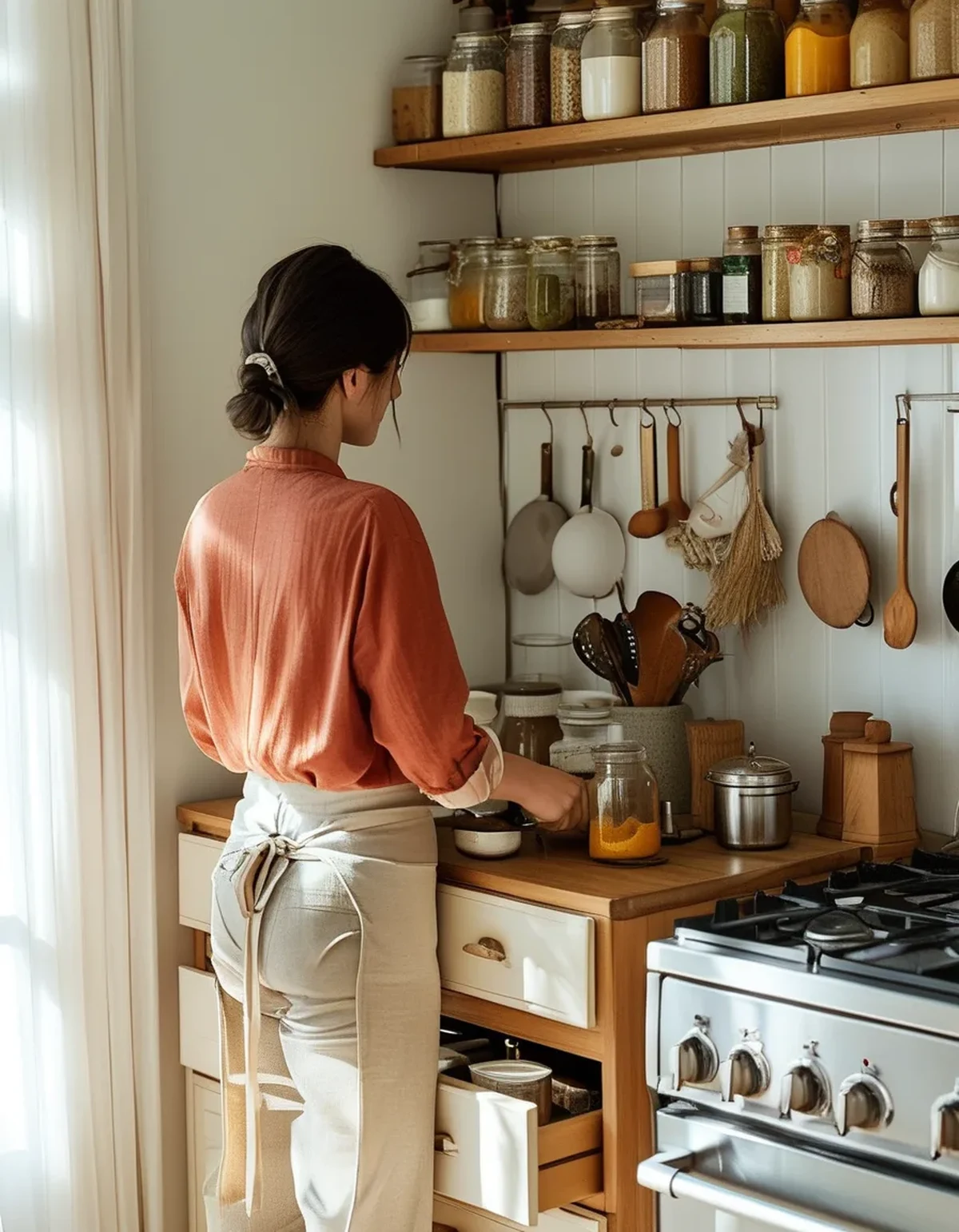
Heat is the biggest single factor. Higher temperatures accelerate both evaporation and oxidation. A rack directly above a cooker can sit twenty degrees above the rest of the kitchen for hours a day, every day, and the effect compounds continuously.
Light degrades compounds directly, and it also bleaches colour, which is why paprika and turmeric in clear jars on a bright shelf lose their vividness within months. Colour loss is a reasonable proxy for flavour loss in these.
Air oxidises. Every time you open the jar, fresh oxygen arrives, and a half-empty jar contains a lot of air permanently in contact with the contents. This is why a jar that has been open for a year is worse than the age alone suggests.
Moisture causes clumping and encourages spoilage. The classic route in is the one nobody thinks about - shaking a jar over a steaming pot. Steam condenses inside the jar, and now you have introduced water to something designed to be dry.
All four are present at the rack above the hob simultaneously, which is what makes it such a specifically bad location for something so universally used.
Where should spices actually live?
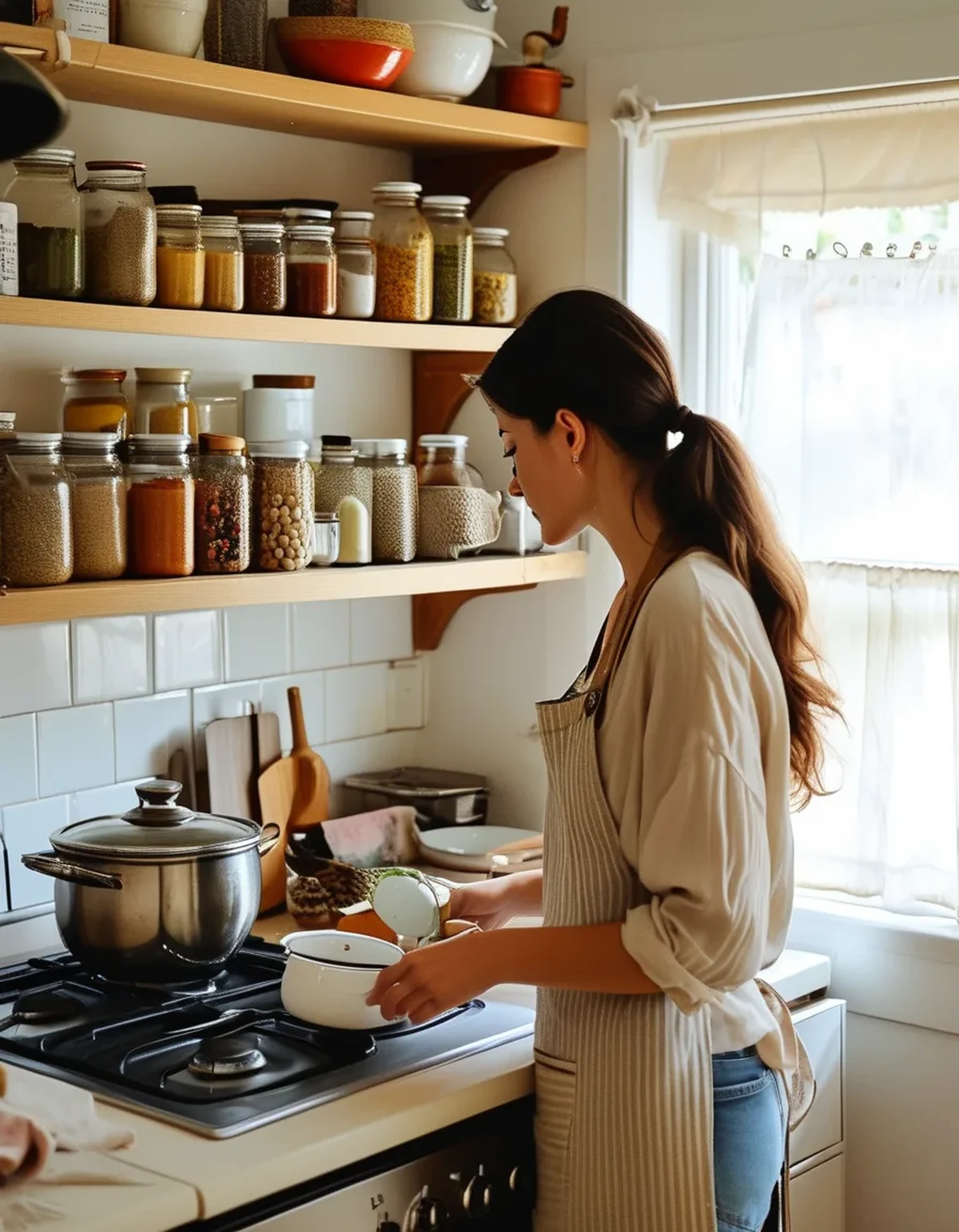
In a closed, dark, cool, dry place that is not adjacent to the cooker. That is most of a normal kitchen, which is the good news.
A drawer is the best option if you have one to spare. Dark whenever it is closed, cool, and the jars lie flat so you can read the labels without picking each one up - which is genuinely the most usable spice storage there is.
A cupboard away from the hob and the kettle is nearly as good. Check what is on the other side of the wall and above it, though: a cupboard sitting above a dishwasher or beside an oven is warmer and damper than it looks.
A pantry or a cool cupboard is ideal if you have one.
What to avoid: any rack above or beside the cooker, a windowsill, a shelf above a radiator, on top of the fridge - which is warmer than the room from the motor - and open shelving in a bright kitchen.
On jars: opaque or dark glass beats clear, and an airtight seal matters more than the material. Screw tops beat flip lids for seal quality. Small jars beat large ones for anything you use slowly, because less headspace means less air.
The honest trade-off is that the convenient place is convenient, and a spice you cannot reach easily is one you will not use. A drawer next to the hob rather than a rack above it is usually the right compromise.
Myth vs Fact: Spice Storage
Myth: Spices should be kept in the fridge. Fact: For almost all of them, no. The fridge is humid and every time you take a jar out, condensation forms on and in it. The exceptions are ground chilli, paprika, and cayenne in hot climates, and whole seeds you want to keep for years - and those should be sealed properly and brought to room temperature before opening.
Myth: Expiry dates on spices matter. Fact: They are a quality estimate rather than a safety one, and they assume ideal storage. A jar stored above the hob is finished long before its date; a well-stored one is often good long after. Smell it - rub some between your fingers and if it is not aromatic, it is not going to taste of anything.
Myth: Buying in bulk saves money. Fact: Only for things you use quickly. A large bag of a spice you use twice a year will lose most of its flavour before you finish it, which is a worse deal than a small jar at a higher unit price. Buy bulk for the five you use weekly, small for everything else.
Myth: A clear jar is fine if the cupboard is dark. Fact: True, and this is the one myth that turns out to be right - light only matters where there is light. Clear jars in a closed cupboard are perfectly good, which means the expensive dark-glass set is unnecessary if you are storing them properly anyway.
Myth: Whole and ground can be stored the same way. Fact: Whole spices last far longer because the aromatic oils are protected inside intact cell structures. Ground spices have vastly more surface area exposed to air. Roughly, whole lasts two to four years and ground lasts six months to a year, and storage conditions swing both figures considerably.
What should you actually do this week?
Five things, in order of how much difference they make.
Move the rack off the hob. The single biggest change available and it takes ten minutes. If you keep anything within the heat zone, make it salt and pepper, which do not degrade.
Stop shaking jars over steaming pans. Pour into your hand or a spoon away from the pan, then add. This is the main route moisture gets in, and it is entirely avoidable.
Do a smell audit. Open everything and rub a pinch between your fingers. Anything that smells of nothing is not seasoning your food, and the cost of using dead spices is not just the waste - it is that you add more and more of something that has no flavour left, which throws off recipes.
Write the opening date on the lid. Not the purchase date, the date you opened it, since that is when the clock actually starts. A marker pen on the lid takes two seconds and settles every future argument about whether a jar is past it.
Split your buying strategy. Bulk and whole for the handful you use constantly - cumin, coriander, pepper, chilli. Small jars for the occasional ones. And buy whole rather than ground wherever you are willing to grind, since the difference in shelf life is measured in years rather than months.
And once things are stored properly, resist the urge to buy replacements for everything at once. Stagger it, so you are not repeating the same mass-expiry in eighteen months’ time.
FAQ: Spice Storage Questions, Answered
How do I know if a spice is still good?
Rub a small amount between your fingers and smell it. Warming it in your hand releases the volatile oils, and if there is little aroma there will be little flavour. Colour is a useful secondary signal for the red and yellow spices.
Can I revive old spices by toasting them?
Partly, and it is worth doing. Gentle dry toasting brings forward what aromatic compounds remain and can make a tired spice usable again. It cannot replace what has evaporated, so it improves a fading spice rather than rescuing a dead one.
Are those magnetic tins on the fridge or wall a bad idea?
Usually yes, on two counts - they are often in the light, and the fridge door is warmer than the room. They also tend to be small and opened often. Attractive, and not where your good spices should live.
TL;DR:
- Heat, light, air, and moisture all destroy the volatile oils that carry flavour, and a rack above the hob delivers all four.
- A closed drawer or a cupboard away from the cooker roughly doubles useful life at no cost.
- Never shake a jar over a steaming pan - that is how moisture gets in.
- Buy whole and in bulk only for what you use weekly, and write the opening date on the lid.
The most expensive thing in your spice cupboard is not the saffron. It is the two years of flavour that evaporated off a rack you chose for convenience.
Keep Reading
This article is for general informational purposes only and is not medical advice. Always consult a qualified health professional for guidance specific to you.