How to Store Spices So They Still Taste Like Something in Six Months
Quick Answer: The four enemies are heat, light, air and moisture. Store spices in airtight opaque containers in a cool dark cupboard away from the hob, buy whole where practical and grind as needed, never shake directly from the jar over a steaming pan, and keep only what you use. A spice rack above the cooker is the single most common storage mistake, and it can halve the useful life of everything on it.
Your cumin is not old. It is fifteen months old, which for ground cumin is very old indeed.
And it has been sitting eighteen inches above a hob the whole time.
What actually destroys a spice?
Heat, first. Volatile aromatic compounds evaporate faster at higher temperatures, and a rack above the hob sits in a rising column of warm air all day.
Light, second. UV degrades both aroma compounds and colour, which is why paprika above a sunny worktop goes brown.
Air, third. Oxidation is continuous once a jar is opened, and every opening exchanges the air inside.
Moisture, fourth, which causes clumping, encourages mould in the worst cases, and accelerates degradation.
Grinding accelerates all four by increasing surface area enormously, which is why ground spices last a fraction as long as whole ones.
None of this makes old spices unsafe - it makes them flavourless, which is a different and more common problem.
Where should spices actually live?
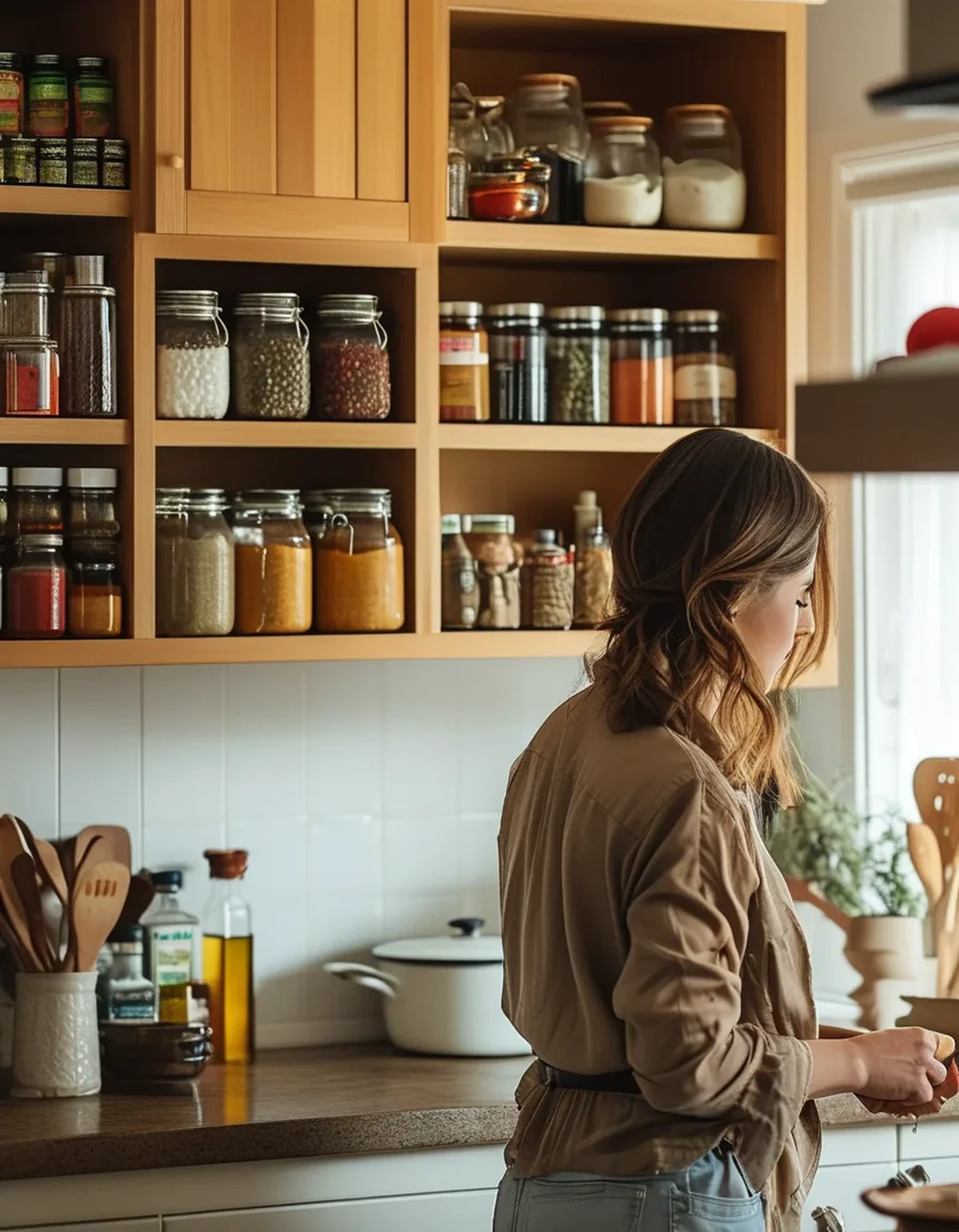
In a cupboard or drawer away from the hob and oven, ideally on an interior wall rather than one that gets sun.
Not above the cooker, which is the most common placement and the worst one. Convenience is genuinely costing you flavour there.
Not on an open rack on the worktop unless the containers are opaque and the spot is out of light.
A drawer is excellent because it is dark, easy to see into, and away from heat.
Not in the fridge, which introduces moisture through condensation each time you take a jar out - with the exception of some ground chilli and paprika, where cold storage is sometimes recommended to preserve colour, and only if sealed well.
And not in the freezer for ground spices, for the same condensation reason. Whole spices freeze acceptably in genuinely airtight containers.
Whole versus ground: does it matter that much?
Yes, and it is the largest single quality difference available. Whole spices retain aroma compounds far longer because far less surface is exposed.
Rough shelf life for ground spices is around six months to a year before noticeable decline; whole spices often two to four years.
Whole peppercorns, cumin, coriander, cardamom, cloves and cinnamon sticks are all easy to buy whole and grind as needed.
A small electric grinder or a mortar and pestle covers this, and a cheap coffee grinder kept for spices works perfectly.
Toasting whole spices before grinding develops flavour considerably and takes ninety seconds in a dry pan.
Keep ground versions only for what you use constantly or for things that are impractical to grind, such as turmeric and paprika.

5 Mistakes Everyone Makes With Spices
1. The rack above the hob. The single most common storage error. Heat and steam rise, and everything on that rack ages faster than it should. Move it and you gain months on every jar.
2. Shaking directly over a steaming pan. Steam enters the jar and moisture stays in it. Measure into your hand or a spoon away from the pan - this one habit prevents most clumping.
3. Buying the big jar to save money. Cheaper per gram and worse per use, because you will not finish it before it fades. Buy the size you will use in six months.
4. Keeping spices you never use. Most kitchens have jars bought for one recipe in 2021. They are taking up the good cupboard space and none of them taste of anything now.
5. Judging by look rather than smell. Colour holds up far longer than aroma. Rub a pinch between your fingers and smell it - if it is faint, it is done, whatever it looks like.
And the honourable mention: not labelling with the date opened. A piece of tape and a pen turns guesswork into knowledge, and it takes five seconds per jar.
How do I tell if a spice is past it, and what then?
Rub a pinch between your fingers and smell it. Warmth from your fingers releases aroma, and a faint smell means a faint flavour.
Compare against a fresh sample if you can, since your nose adapts to what you use regularly and you stop noticing gradual decline.
Taste a tiny amount. Flat, dusty or vaguely bitter means it has gone.
Faded spices are not dangerous, just weak, so the choice is between replacing and using more.
Using more does not fully compensate, because what remains is the less volatile and often less pleasant part of the profile - which is why a doubled quantity of old cumin tastes dusty rather than stronger.
Autumn is a sensible time to audit, since this is when cooking shifts to spiced braises, curries and baking, and it is better to find out in the cupboard than in the pot.
FAQ: Spice Storage Questions, Answered
How long do spices actually last?
Roughly six months to a year for ground spices before noticeable decline, and two to four years for whole. Dried herbs sit between one and three years. These are flavour timelines, not safety ones.
Can I store spices in the fridge or freezer?
Generally not recommended for ground spices because of condensation. Whole spices freeze acceptably in genuinely airtight containers, and some people refrigerate paprika and chilli powder to preserve colour.
Are clear glass jars bad?
Only if they sit in light. Clear glass in a dark cupboard is fine and lets you see what you have. Clear glass on a sunny worktop is a problem.
Is it worth buying whole spices?
For the ones you use often, yes - it is the biggest single improvement available in this area. Toasting and grinding takes a couple of minutes and the difference is obvious.
Why do my spices clump?
Moisture, almost always from shaking directly over a steaming pan. Measure away from the heat and the problem largely disappears.
Do expensive spices last longer?
Not inherently, but fresher stock at purchase means more of the shelf life is yours. Buying from somewhere with high turnover matters more than price.
Should I throw out old spices?
They are not unsafe, so it is a flavour decision. If a spice smells of nothing, it is contributing nothing, and keeping it means the cupboard is full of things that do not work.
TL;DR:
- Heat, light, air and moisture are what destroy spices - not time on its own.
- Move the rack off the wall above the hob; it is the most common and most costly mistake.
- Airtight, opaque, cool and dark - a drawer away from the cooker is ideal.
- Buy whole and grind as needed for anything you use often.
- Never shake directly over a steaming pan; measure away from the heat.
- Judge by smell, not colour, and label jars with the date you opened them.
Ground spices are good for about six months, and most kitchens are storing them exactly where they last least.
Keep Reading
This article is for general informational purposes only and is not medical advice. Always consult a qualified health professional for guidance specific to you.