Why Grinding Spices in a Coffee Grinder Changes Them More Than a Mortar
Quick Answer: A blade grinder spins fast enough to generate real heat, which drives off the most volatile aromatic compounds — the top notes — before the spice ever reaches your pan. It also produces a uniform, very fine powder that releases everything at once. A mortar crushes at room temperature and produces an uneven texture that releases flavour in stages. The result is that the same spice ground two ways gives you a bright, layered flavour or a flatter, more immediate one.
Both methods have their place.
The mistake is assuming they are the same operation performed at different speeds.
What does the heat actually do?
It removes exactly the compounds you were grinding for.
Spice aroma comes largely from volatile oils, and volatile means what it sounds like — these compounds evaporate readily, and they evaporate faster when warm. They are also the source of the bright, high, distinctive character of a spice, as opposed to its heavier base notes.
A blade grinder spinning at very high speed against hard seeds generates friction, and friction generates heat. Grind for twenty or thirty seconds and the chamber is noticeably warm to the touch — you can feel it, and you can usually smell it, because what you are smelling is the aroma leaving.
That smell in the kitchen is the loss. Anything that reaches your nose from the grinder is not going into your food.
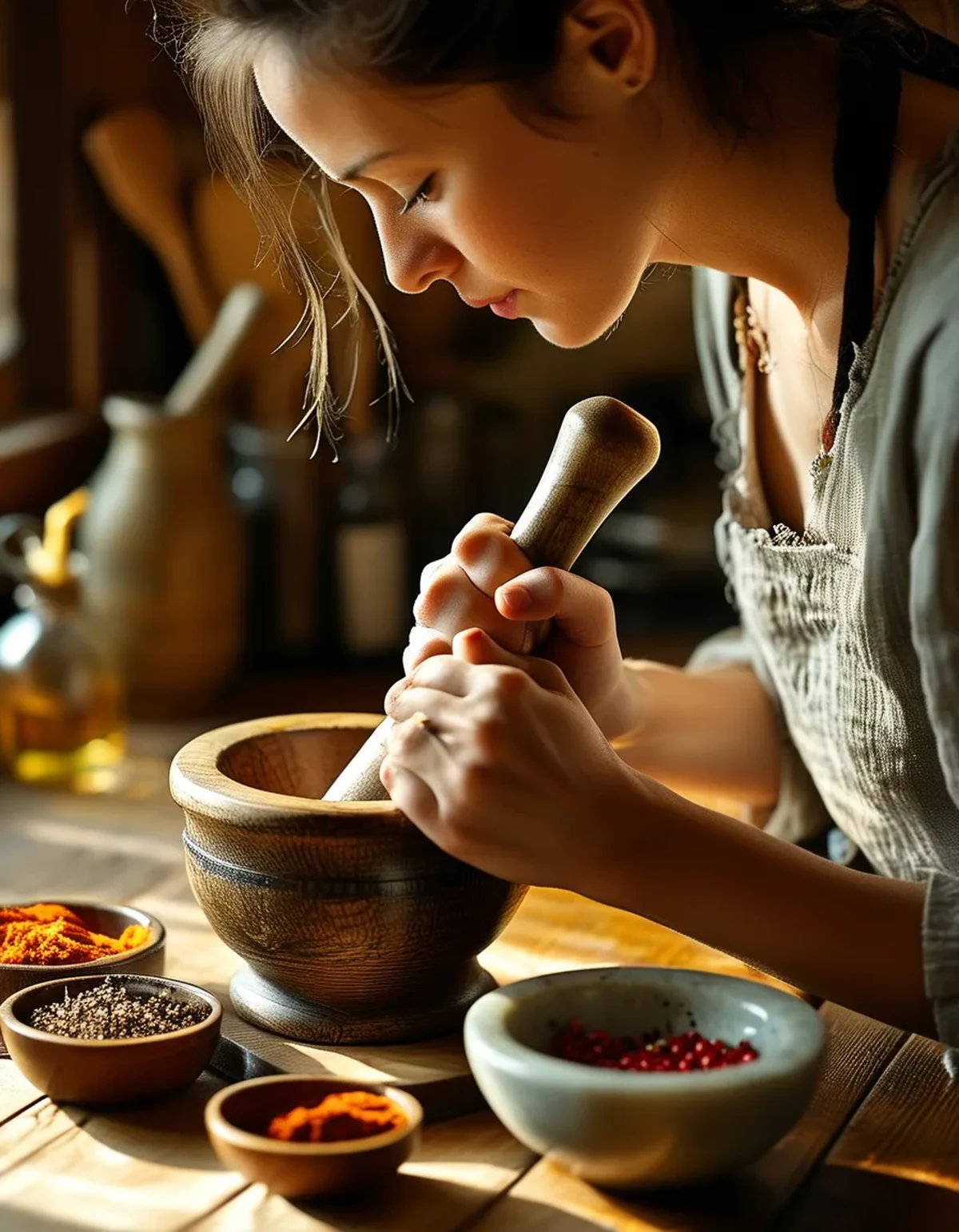
A mortar and pestle works by crushing and shearing at ambient temperature. Some volatiles are released — that is why grinding smells good — but far less is driven off, because there is no heat driving it.
The practical difference is most noticeable in the delicate spices: coriander seed, cumin, fennel, cardamom, black pepper. Their character is largely in the top notes. In hardier spices — cinnamon bark, cloves, dried chilli — the difference is smaller because more of the flavour sits in less volatile compounds.
Does particle size matter as much as heat?
Nearly, and it works in a different way.
A blade grinder produces a fairly uniform fine powder. A mortar produces a mixture — some near-powder, some small fragments, some pieces barely broken.
That unevenness is a feature rather than a defect. Fine particles release flavour immediately and exhaust quickly. Coarser fragments release more slowly and continue contributing through a longer cook.
So a mortar-ground spice mix has a built-in staggered release. A uniformly fine one delivers everything at the front and has little left later.
This explains a common frustration: a dish that tastes strongly spiced when you add the spice and flat by the time it reaches the table. Very fine grinding plus a long cook gives you exactly that curve.
Surface area also affects how fast flavour degrades. Finer powder has vastly more surface exposed to air, which is why ground spices lose potency in months while whole ones last for years — and why anything you grind very fine should be used immediately rather than stored.
There is a texture consideration too. A rustic mortar-ground mix leaves perceptible texture in a rub or a dressing, which some dishes want. A fine powder disappears completely, which others want. Neither is better in the abstract.
When should you actually use a grinder?
Frequently, because the practical advantages are real and worth taking.
Use a grinder when:
You are grinding a large quantity. Half a cup of spice in a mortar is a genuine workout and takes a long time, during which volatiles are escaping anyway.
You need a very fine, uniform powder. Baking, delicate sauces, anything where texture would be intrusive.
The spices are hard. Cinnamon bark, star anise, dried ginger and nutmeg are punishing in a mortar and trivial in a grinder.
The dish cooks briefly. Fine powder releasing everything at once suits a quick pan sauce well.
Use a mortar when:
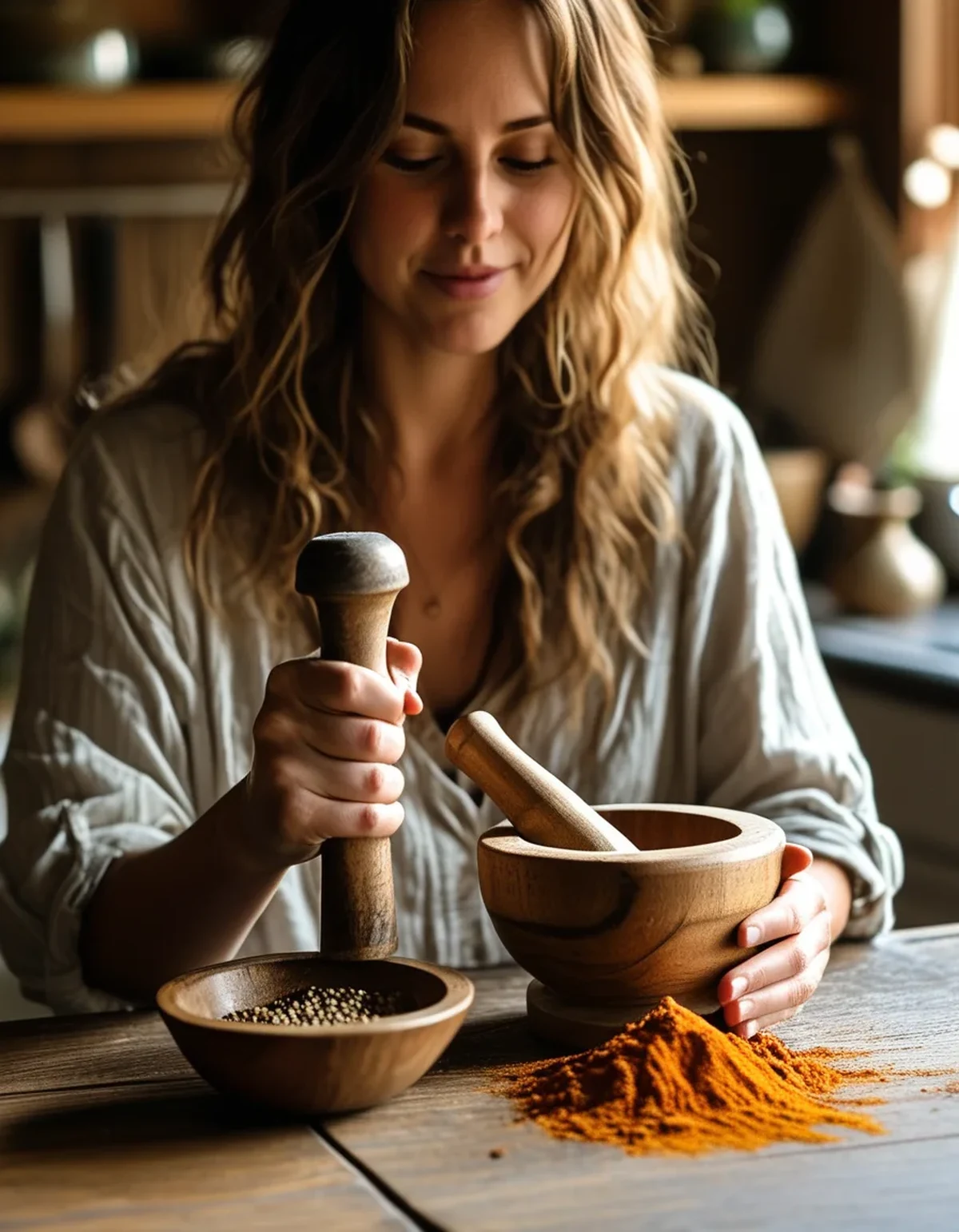
The spice is delicate and aromatic. Coriander, cumin, fennel, cardamom, pepper — the ones where the top notes are the point.
You want staggered release in a long cook. Braises, curries, anything simmering for an hour.
Quantities are small. Under a couple of tablespoons is faster in a mortar than in a grinder once you count cleaning.
You are combining wet and dry. Garlic, ginger, chilli and salt into a paste is something a mortar does well and a blade grinder does badly.
And a technique that gets the best of both: pulse in the grinder in short bursts with pauses between, letting the chamber cool. Five one-second pulses generate far less heat than one five-second run, and the result is closer to a mortar’s than a continuous grind is.
Myth vs Fact: Spice Grinding
Myth: A burr grinder solves the heat problem entirely.
Fact: It reduces it considerably, since burrs crush rather than beat and generally run slower. It does not eliminate it, and most domestic burr grinders are built for coffee and struggle with oily or fibrous spices.
Myth: You should use the same grinder for coffee and spices.
Fact: You can, and residual aromas transfer readily in both directions. Grinding rice or bread in it between uses helps, and a second cheap grinder dedicated to spices is a more reliable solution.
Myth: Toasting before grinding is optional refinement.
Fact: Toasting changes the compounds present through browning reactions, creating flavours that were not there before rather than merely intensifying existing ones. It also dries the spice, which makes it grind more cleanly. It matters more than the grinding method does.
Myth: Pre-ground spices are basically fine.
Fact: They are convenient and they fade fast — ground spices lose noticeable potency within months while whole ones hold for years. If you grind your own, that gap is the reason.
Myth: Grinding finer always extracts more flavour.
Fact: It extracts flavour faster, which is a different thing entirely — and in a long cook, faster means the flavour peaks early and is gone by serving, which is precisely the problem people are trying to solve when they add more spice at the end and find it does not help.
How to get the most out of either method
Practical technique, because both are frequently done badly.
For a grinder:
Pulse, do not run. Short bursts with pauses. This is the single change that most reduces heat loss.
Grind small batches. A full chamber takes longer and gets hotter.
Let it cool between batches if you are doing several.
Grind immediately before use. Ground spice starts degrading straight away and fine powder degrades fastest.
Clean with rice or dry bread, pulsed and discarded, rather than with water.
For a mortar:
Use a rocking, grinding motion rather than pounding. Pounding fragments; grinding shears, which releases oils more effectively and is considerably less effort.
Add a pinch of coarse salt as an abrasive for small quantities. It genuinely speeds things up and salt is usually going in anyway.
Toast first, and let cool before grinding. Warm spices are softer, oilier and clog a mortar; cooled toasted spices are brittle and grind cleanly.
Work in small batches and tip out the fine portion as it forms, so you are not re-grinding what is already done.
Choose the right mortar. A smooth polished marble one is decorative and poor at the job. Unglazed granite or rough ceramic gives the friction that does the work.
One seasonal note: as cooking shifts towards braises, stews and slow-cooked dishes over the coming months, the staggered-release argument for coarser grinding becomes more relevant than it was during a summer of quick pan dishes and dressings. It is a reasonable time to get the mortar out.
FAQ: Spice Grinding Questions, Answered
How much flavour am I actually losing to a blade grinder?
Enough to notice in a side-by-side test with an aromatic spice like cumin or coriander, and not enough to ruin anything. If you can smell it strongly while grinding, that is a reasonable proxy for how much is escaping.
Is a dedicated electric spice grinder better than a coffee grinder?
Usually only in that it is dedicated, which solves the flavour transfer problem. Most are the same blade design and generate the same heat.
Should I grind everything fresh?
Ideally, and practically it is worth prioritising the aromatic ones — cumin, coriander, cardamom, pepper, fennel. Cinnamon, cloves and paprika hold up better pre-ground and are harder work to grind.
How long do freshly ground spices last?
Use within a week or two for anything you want the top notes from. Stored airtight and away from heat and light they remain usable for months, but the reason you ground them fresh will have faded.
Does the mortar material matter?
Yes — texture matters more than material. Rough granite or unglazed stone grips and shears; polished marble slides. A large heavy one is also considerably easier to use than a small light one.
Can I use a pepper mill for other spices?
For similar-sized hard seeds like coriander, yes. Oily spices and anything fibrous will clog the mechanism, and cleaning most pepper mills properly is difficult.
TL;DR:
- Blade grinders generate real heat, which drives off the volatile top notes before the spice reaches the pan
- Mortars work at room temperature and produce uneven particles that release flavour in stages during a long cook
- Use a grinder for hard spices, large batches and fine powders; use a mortar for aromatics, small amounts and pastes
- Pulsing in short bursts rather than running continuously recovers much of the difference
- Finer grinding extracts faster, not more — which is why heavily ground dishes taste strong early and flat at the table
Grind a teaspoon of cumin both ways and smell them side by side. The difference is obvious in about three seconds, and it will tell you more than any amount of reading about which method your cooking actually wants.
Keep Reading
This article is for general informational purposes only and is not medical advice. Always consult a qualified health professional for guidance specific to you.