Why Toasting Spices Changes How Much You Need Not Just the Flavour
Quick Answer: Heat drives volatile aromatic compounds out of the spice and triggers browning reactions that create new ones, so a toasted spice is both more intensely aromatic and different in character. Practically, that means a toasted quantity delivers noticeably more flavour than the same untoasted quantity, and recipes rarely tell you which they assumed. Start at around three quarters of the called for amount when you toast, and adjust.
Toasting is not just a technique. It changes the arithmetic of the recipe.

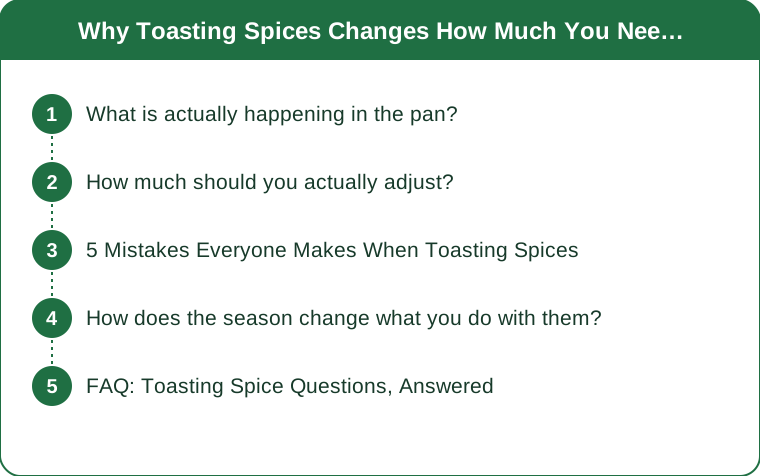
What is actually happening in the pan?
Two separate processes, and they produce different results.
Volatilisation comes first. The aromatic compounds in spices are largely volatile oils held within the cell structure. Heat mobilises them, which is why the kitchen smells within thirty seconds — those are the compounds leaving the spice. Some reach your food and some reach the air, which is why toasting for too long produces a wonderful smelling kitchen and a disappointing dish.
Then browning reactions begin. As the surface heats past a certain point, Maillard reactions between amino acids and sugars generate entirely new compounds — nutty, roasted, deeper notes that were not present before. This is the part that changes the character rather than just the intensity, and it is why toasted cumin tastes different from raw cumin rather than merely stronger.
There is also a mechanical effect. Heat makes the cell structure brittle, so toasted spices grind more finely and release their content more readily into the dish. A finer grind with a more accessible interior means more flavour extraction for the same weight.
The combination is what changes the quantity you need. More available aroma, more efficient extraction, plus new compounds adds up to a meaningfully stronger result from the same spoonful.
The practical consequence is the part recipes skip. A tablespoon of freshly toasted and ground cumin is not interchangeable with a tablespoon from a jar, and substituting one for the other one to one is how dishes end up unbalanced in either direction.
How much should you actually adjust?
Start around three quarters and taste, with a few spice specific exceptions.
The general rule: if a recipe was written for pre ground spice and you are toasting and grinding whole, use about three quarters of the stated amount. Then adjust upward if needed, since adding is easy and removing is impossible.
Some spices need more caution than others:
Cumin and coriander gain a lot from toasting and become considerably more assertive. These are the ones where three quarters is a genuine necessity rather than a suggestion.
Fennel and mustard seed change character sharply, becoming sweeter and nuttier, and a quantity that was balanced raw can dominate toasted.
Chilli needs real care. Toasting concentrates heat as well as flavour, and it burns quickly — scorched chilli turns bitter and acrid faster than any other spice, and the smoke is genuinely unpleasant to breathe.
Delicate ground spices should generally not be dry toasted at all. Cinnamon, cardamom, nutmeg, and anything already ground has too much surface area and burns in seconds. Bloom these in fat instead, which is gentler and more controllable.
On blooming, since it is the other half of this: frying ground spices in oil for twenty to forty seconds extracts fat soluble compounds and distributes them through the dish. It is more efficient than dry toasting for ground spice, and it is the standard technique in a great many cuisines for exactly that reason.
One useful ratio: for whole spice you plan to grind, toast, cool, then grind. Grinding while warm produces a paste rather than a powder, because the released oils have nowhere to go.

5 Mistakes Everyone Makes When Toasting Spices
1. Toasting everything together. Seeds of different sizes cook at completely different rates. Coriander is done well before cumin; mustard seeds pop before either. Toast in batches by size, or accept that some will be scorched and some raw.
2. Walking away. The window between properly toasted and burnt is roughly thirty seconds. Spices go from fragrant to bitter faster than almost anything else in cooking, and there is no recovery once they are past it.
3. Leaving them in the hot pan. Residual heat keeps cooking them after the burner is off. Tip them onto a cold plate immediately, which is the difference between perfect and slightly burnt more often than people realise.
4. Grinding while hot. Warm spices release oil and clog a grinder into a paste. Two minutes on a plate solves it entirely.
5. Toasting a big batch to save time. The whole benefit is the volatile compounds, and those dissipate over days. Toasted spice loses its advantage within about a week, so a jar of pre toasted blend made a month ago is barely better than untoasted.
How does the season change what you do with them?
Quite a lot, and this is a genuinely good time of year to reset the spice cupboard.
Cooking shifts toward the methods that suit toasted spice. Braises, stews, roasts, and slow cooked dishes all come back as the weather cools, and long cooking is where toasted whole spices come into their own — they hold up over hours where delicate ground spice fades.
Warm spices become seasonally appropriate. Cinnamon, clove, allspice, star anise, ginger. Worth knowing that most of these are better bloomed in fat than dry toasted, because they scorch readily.
Whole spice keeps far better than ground, and this is the moment to make the switch. Ground spice loses meaningful aroma within about six months; whole spice holds for one to two years. If you are cooking more from now until spring, buying whole and grinding as needed is the single change that most improves the result.
A seasonal cupboard audit worth doing now:
Smell everything. If a spice smells faint or dusty in the jar, it will contribute nothing to a dish. The test is aroma, not the date on the label, and most people’s cupboards contain several jars that are effectively spent.
Move them out of the heat and light. Cupboards above stoves are the worst possible location, and it is where most people keep spices. Heat and light degrade aromatic compounds continuously.
Replace the three or four you actually use most, rather than everything. Cumin, coriander, and paprika turn over fastest in most kitchens.
Buy smaller quantities more often. A large bag at a good price is not a saving if it is stale by February.
One genuinely practical autumn note: toasting spices fills the house with the smell, which is pleasant now in a way it was not in August with the windows open. Small thing, and it is one of the reasons the technique feels seasonal.
FAQ: Toasting Spice Questions, Answered
How do I know when they are done?
By smell and by a slight colour change. When the aroma becomes noticeably stronger and shifts from raw to nutty, they are finished — usually somewhere between one and three minutes over medium heat, with constant movement.
Should I toast ground spices?
Generally no in a dry pan, because the surface area is too high and they burn in seconds. Bloom them in oil for twenty to forty seconds instead, which is gentler and extracts fat soluble compounds effectively.
Can I toast a large batch and store it?
You can, and the benefit fades within about a week as the volatile compounds dissipate. Toasting small amounts as needed is meaningfully better, and it takes two minutes.
How much should I reduce the quantity?
About three quarters of what a recipe calls for as a starting point, particularly with cumin, coriander, and fennel. Taste and add, since you cannot take it out.
TL;DR:
- Toasting drives out volatile aromatics and creates new browning compounds, so it changes both intensity and character.
- Toasted spice is stronger than the same weight untoasted, so start at about three quarters of the recipe amount.
- Toast whole spices in batches by size, tip them out of the hot pan immediately, and cool before grinding.
- Bloom ground and delicate spices in fat instead, and switch to buying whole as autumn cooking begins.
Smell every jar in your spice cupboard this week. Anything faint is doing nothing for your food.
Keep Reading
This article is for general informational purposes only and is not medical advice. Always consult a qualified health professional for guidance specific to you.