Why the Same Spice Tastes Completely Different in Oil Than in Water
Quick Answer: Most of the compounds that carry spice aroma are fat-soluble, not water-soluble. Added to oil, they dissolve and distribute through the whole dish; added to a watery liquid, much of the flavour stays locked in the ground particles. This is why blooming spices in fat produces a dish that tastes several times more strongly spiced from the identical quantity.
You used a full tablespoon of cumin and the curry still tastes vaguely of nothing. Your friend used a teaspoon and their version is fragrant across the room.
The difference is almost never quantity. It is when and into what the spice went.
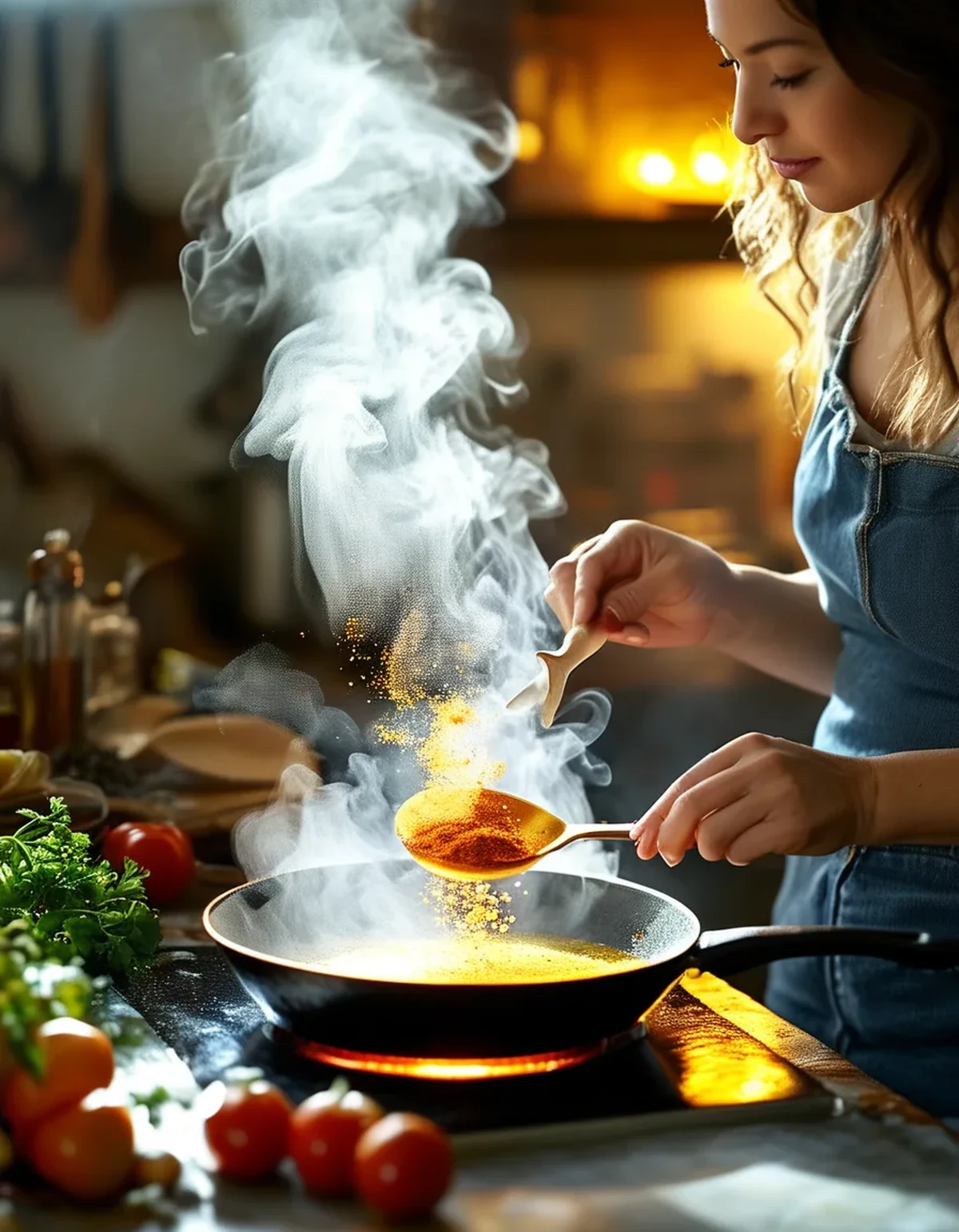
What is actually happening when you bloom a spice?
You are dissolving flavour compounds out of solid particles into a medium that can carry them.
Ground spice is a collection of small solid fragments. The aromatic compounds — the things you actually taste and smell — are held inside those fragments, largely in the form of volatile oils.
Those compounds are overwhelmingly fat-soluble. Put ground spice into hot oil and they dissolve into it, spreading through the fat and, from there, through everything the fat touches. Put the same spice into water or stock and most of the compounds stay where they were. You get the fraction that is water-soluble and the flavour released by the particles you happen to chew.
Heat matters as well as medium. Warm oil accelerates the extraction considerably, and moderate heat also drives some Maillard and toasting reactions that create new aromatic compounds not present in the raw spice. This is why bloomed cumin smells different from raw cumin rather than simply stronger.
The practical version: the same weight of spice can produce a dish that tastes three or four times more spiced depending purely on whether it met fat. No other single technique in home cooking produces that large a difference for that little effort.
Which spices need fat and which do not?
Not everything requires blooming, and knowing which is which saves effort.
Need fat, benefit enormously: cumin, coriander seed, mustard seed, fenugreek, turmeric, paprika, chilli, curry leaves, asafoetida, cardamom, cinnamon, cloves, and most whole seeds. These are dominated by fat-soluble compounds.
Work in water reasonably well: ginger, garlic, and to some extent black pepper — these have substantial water-soluble components, which is why they come through in broths and poaching liquids.
Should not be bloomed: delicate ground spices added for freshness rather than depth — garam masala, sumac, za’atar, ground cinnamon in a finishing role, and fresh herbs. These lose their volatile top notes to heat, which is exactly what makes them worth adding at the end.
Burn quickly and need care: turmeric, paprika and any ground chilli. These go bitter in seconds at high heat. Add them to oil off the heat or at low temperature, stir for twenty to thirty seconds, and move on.
A workable general rule: whole seeds go into hot fat first, ground spices go in after aromatics at lower heat, and finishing spices go in at the end off the heat.
What Nobody Tells You About Blooming Spices
Twenty seconds is often the whole window. Ground spices in hot oil go from raw to fragrant to burnt very quickly. Most recipes say ‘until fragrant’ without mentioning that fragrant arrives in under half a minute and burnt arrives ten seconds later.
Bitterness is the sign you went too far, and it does not cook out. A burnt spice base contaminates the entire dish, and the only fix is to start the base again. Recognising the smell change — from sweet and aromatic to sharp and acrid — is the skill worth developing.
Blooming in butter is different from blooming in oil. Butter’s milk solids brown and add their own flavour, and its lower smoke point means less margin. Ghee has the flavour without the burning risk, which is precisely why it is the traditional medium.
You can bloom into coconut milk. The fat content is high enough to extract properly, and it is the standard approach in a good deal of South East Asian cooking — split the coconut cream in the pan until the oil separates, then bloom in that oil.
Cold-blooming works for delicate applications. Spices left in room-temperature oil for a few hours extract slowly without any heat damage, which is how you make an aromatic oil for finishing.
The amount of fat matters. Spices bloomed in a teaspoon of oil in a large pan mostly sit on dry metal and scorch. You need enough fat for the spices to be suspended in it.
Whole spices bloom slower and more forgivingly than ground ones. If you are nervous about burning, start with whole seeds — they give you thirty to sixty seconds of window instead of ten.
How do you fix a dish that tastes under-spiced?
The instinct is to add more spice, and it usually makes things worse — you end up with a gritty, dusty texture and marginally more flavour.
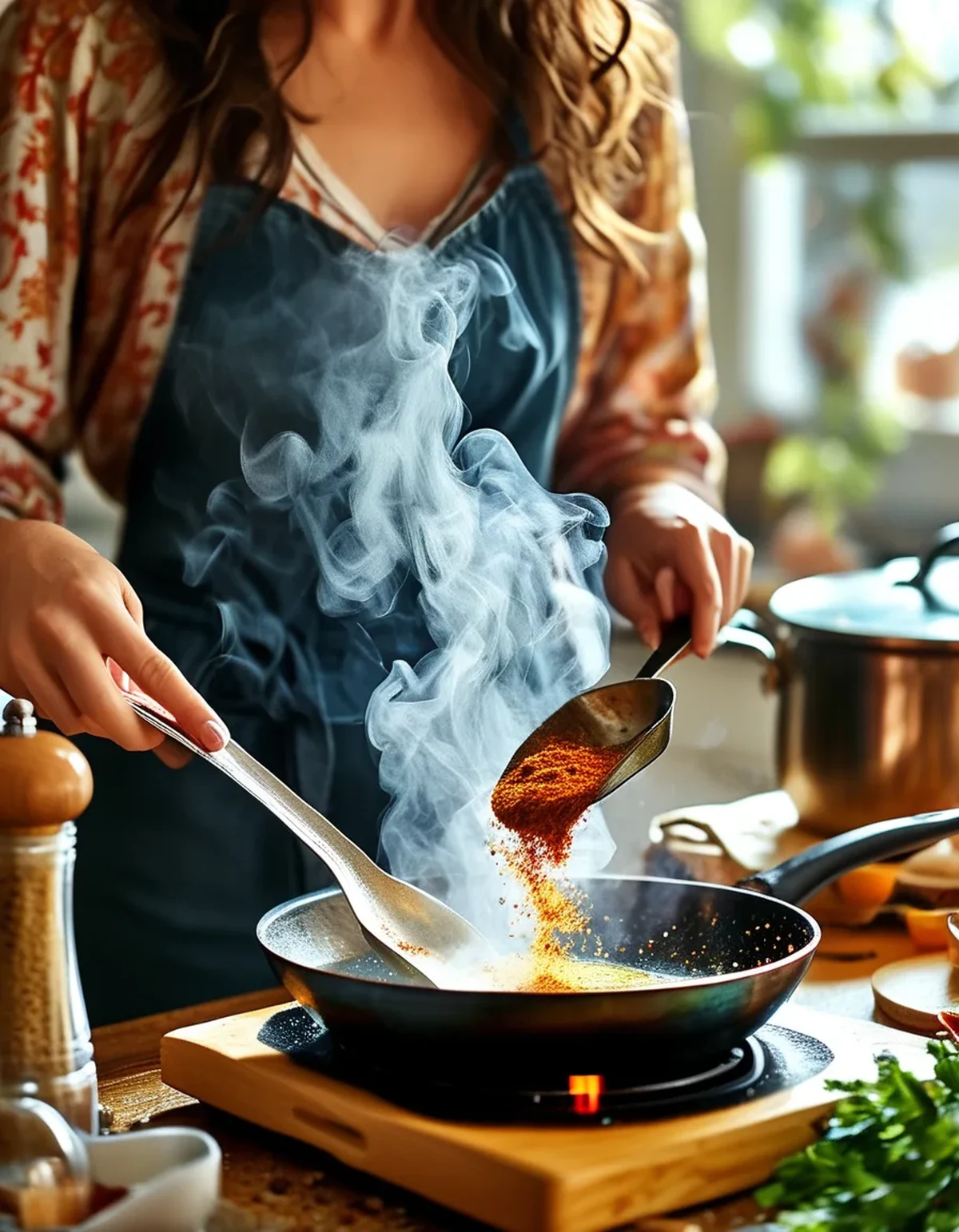
Bloom a small amount separately and stir it in. Heat a tablespoon of oil or ghee in a small pan, add a teaspoon of the relevant spice, cook for twenty seconds, and pour the whole thing into the dish. This technique — a tempering or tarka — is a standard finishing move in Indian cooking specifically because it solves this problem.
It works at any stage, including at the table, and it transforms a flat dish more reliably than anything else available.
Check the acid and salt first. A dish that tastes flat is under-seasoned as often as it is under-spiced, and a squeeze of lemon or a pinch of salt sometimes reveals spice that was there all along.
Consider the age of the spice. Ground spices lose volatile compounds continuously and a jar over a year old may have very little left regardless of technique. If a freshly bloomed tarka does not fix it, the spice is the problem.
And check whether the fat is present at all. Very low-fat dishes are structurally difficult to spice well, because the carrier is missing. A tablespoon of oil added to a lean vegetable stew improves the spice perception disproportionately to what it adds in richness.
Does this change how you build a dish?
It changes the order more than anything else.
The standard sequence that works across a large number of cuisines:
- Fat into the pan, enough to suspend what follows.
- Whole spices, until they pop or darken slightly — 30-60 seconds.
- Aromatics — onion, garlic, ginger — cooked down properly. This takes longer than most recipes suggest.
- Ground spices, at reduced heat, 20-30 seconds only.
- Something wet to stop the cooking — tomatoes, stock, coconut milk. This is the safety net.
- Long cook.
- Finishing spices and fresh herbs off the heat.
Step 5 is the one that protects you. Having the liquid measured and ready beside the pan before you add ground spices means you can stop the extraction instantly. Most burnt spice bases happen because someone turned away to open a tin.
For slow cookers and any long wet cook, the implication is clear: bloom the spices in a pan first, then add them. Spices stirred directly into a slow cooker sit in water for eight hours and release a fraction of what they hold. This is the single biggest reason slow-cooked curries taste flat, and it costs five minutes to fix.
FAQ: Spices, Fat and Water, Answered
Does this mean low-fat cooking cannot be well spiced?
It is harder but not impossible. Even a small amount of fat used specifically to bloom the spices — a teaspoon in a whole dish — carries most of the benefit, because you only need enough to dissolve the compounds, not enough to make the dish rich. Blooming into a spoon of oil and stirring it through is a better use of a small fat budget than adding oil generally.
Can I bloom spices in the microwave?
Yes, and it works better than expected. Oil and spices in a small bowl, 30-45 seconds at moderate power, stirring halfway. It is less controllable than a pan and perfectly adequate for a quick tarka to rescue a finished dish.
Should I toast whole spices before grinding as well as blooming?
Toasting dry and blooming in fat do different things — dry toasting develops flavour through browning reactions, blooming extracts into a carrier. Doing both is the traditional approach for a reason. If you only do one, blooming has the larger effect on how the finished dish tastes.
TL;DR:
- Most spice aroma compounds are fat-soluble, so spice added to water releases only a fraction of what it holds.
- Blooming in hot fat can make the same quantity taste several times stronger, and creates new aromatics through gentle toasting.
- Whole seeds first into hot fat, ground spices after aromatics at low heat for 20-30 seconds, finishing spices off the heat.
- Have the liquid ready beside the pan — ground spices go from fragrant to burnt in about ten seconds, and burnt does not cook out.
- To rescue a flat dish, bloom a teaspoon separately and stir it in; for slow cookers, always bloom before adding.
Once you have made the same dish twice — once with the spices stirred in and once with them bloomed — the difference is impossible to unlearn. It is the closest thing home cooking has to a free upgrade, and it costs about thirty seconds and a spoon of oil.
Keep Reading
This article is for general informational purposes only and is not medical advice. Always consult a qualified health professional for guidance specific to you.