Why Spices Behave Differently in a Slow Cooker Than on the Stove
Quick Answer: Slow cookers never reach the temperatures that develop spice flavour. Blooming spices in hot oil happens around 120 to 160°C; a slow cooker sits near 90°C - so ground spices added directly stay raw-tasting and dusty. Meanwhile the sealed lid traps volatile aromatics that would normally cook off, concentrating the harsher notes. The fix is to bloom before and refresh after: cook your spices in oil in a pan first, and add a second smaller dose in the last 20 minutes.
Here is what happens to each type of spice and when to add it.
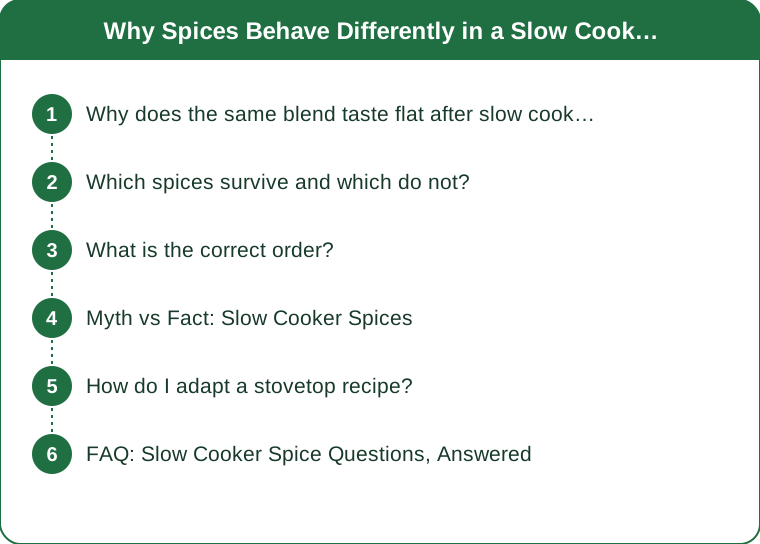
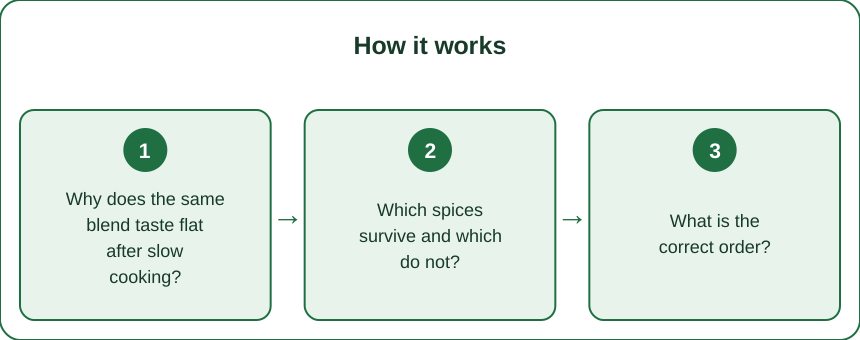
Why does the same blend taste flat after slow cooking?
The Maillard and roasting reactions that develop spice flavour need heat a slow cooker does not produce. Toasting and blooming happen well above the temperature inside a covered slow cooker, which typically sits somewhere around 90°C.
Ground spices added raw stay raw. Without that initial heat in fat, the starchy, dusty quality never cooks out - which is the muddy note people describe.
Fat-soluble compounds need fat and heat to release. Many of the aromatic compounds in cumin, coriander, and chilli dissolve into oil rather than water. In a watery braise with no blooming step, a large share simply never gets extracted.
Long cooking degrades delicate aromatics. Eight hours at 90°C is gentle but relentless - the volatile top notes break down, leaving the heavier, more bitter compounds behind.
And a sealed lid keeps everything in. On a stove, harsher volatiles evaporate off. In a slow cooker they condense on the lid and drip back, which is why long-cooked spice can taste both weak and slightly acrid at the same time.
Which spices survive and which do not?
Whole spices are the clear winners. Cinnamon sticks, cardamom pods, star anise, bay, cloves, and whole cumin release slowly and hold up over hours. Slow cooking is genuinely good for them.
Hard roots hold up well. Dried ginger, turmeric, and galangal are robust and benefit from the long extraction - these are the spices a slow cooker actually improves.
Ground warming spices fade badly. Ground coriander, cumin, and garam masala lose most of their aromatic character over six to eight hours and need refreshing at the end.
Chilli heat behaves oddly - it intensifies. Capsaicin is stable and extracts steadily into fat over hours, so a dish that tasted mild at hour two can be genuinely hot at hour eight. Start with half the chilli you would use on the stove.
Herbs split by type. Woody herbs - rosemary, thyme, bay, oregano - survive long cooking and can go in at the start. Soft herbs - coriander, parsley, basil, dill - must go in at the very end or they turn grey and taste of nothing.
And black pepper is worth handling separately. Its aromatic compounds are volatile and largely lost over long cooking, so pepper added at the start contributes almost nothing. Grind it in at the end instead.
What is the correct order?
Bloom first, in a pan, before anything goes in the pot. Heat 2 to 3 tablespoons of oil, add whole spices for 30 to 60 seconds until fragrant, then ground spices for 20 to 30 seconds only - they burn fast. Tip the whole lot in, oil included.
This is the single change that fixes most slow cooker spice complaints. It takes three minutes and it is the step that separates a good slow-cooked curry from a disappointing one.
Brown the aromatics in the same pan. Onion, garlic, and ginger softened before blooming build a base the slow cooker cannot create, since no browning happens inside it.
Whole spices and woody herbs go in at the start, with the main ingredients. They have the hours they need.
Reserve about a third of your ground spices for the end. Stir them in during the last 20 to 30 minutes on high - enough time to lose the raw edge but not enough to fade. This restores the top notes that long cooking removed.
And finish with acid and soft herbs off the heat. A squeeze of lemon or a splash of vinegar lifts everything and makes the spice read as brighter without adding more of it - and it is the fix for a dish that tastes flat but is not actually under-seasoned.
Myth vs Fact: Slow Cooker Spices
Myth: long cooking means flavours meld and intensify, so use less spice. Fact: flavours do meld, but aromatic intensity falls. Most slow cooker dishes need more total spice than the stovetop version, added in two stages rather than one.
Myth: you can skip browning and blooming to save washing up. Fact: the slow cooker cannot generate those reactions at any point. Skipping the pan is skipping most of the flavour development, not deferring it.
Myth: chilli mellows over long cooking. Fact: the opposite. Capsaicin is heat-stable and keeps extracting into the fat, so the dish gets hotter over time. Start with half.
Myth: dried herbs are always better than fresh for slow cooking. Fact: true for woody herbs, false for soft ones. Dried parsley and coriander contribute almost nothing - use fresh, at the end.
Myth: adding more spice at the end fixes a flat dish. Fact: partly - but raw ground spice stirred into a finished dish tastes dusty. Bloom the top-up dose in a spoonful of hot oil first, or add it 20 minutes before the end so it has time.
Myth: salt can be adjusted at any point. Fact: salt affects how much spice you perceive, so an under-salted dish reads as under-spiced. Check salt before adding more spice - it is the more common problem by a wide margin.
How do I adapt a stovetop recipe?
Increase total ground spice by roughly a third, and split it: two thirds bloomed at the start, one third added near the end.
Halve the chilli, then adjust at the end once you can actually taste the finished heat level.
Cut the liquid by about a third. Slow cookers lose very little to evaporation, so a stovetop quantity leaves the spice diluted - which is a second, separate cause of flat flavour that people blame on the spices.
Move all soft herbs, pepper, and citrus to the end. Anything you would normally add in the last five minutes on the stove belongs in the last five minutes here too.
Add coconut milk and dairy in the final 30 minutes. Early addition risks splitting and dulls the spices further - and coconut milk in particular loses its character over hours.
And taste at the end with a proper spoon of the sauce, not a drop. Long-cooked dishes taste different in quantity than as a taste from a teaspoon, and undersalting is the most common conclusion people get wrong at this stage.
Seasonal note: as braising season starts in earnest, check the age of your ground spices before the first big cook of autumn. Ground spices lose potency in months, and a jar that has sat since last winter is a large part of why the first stew of the season disappoints.
FAQ: Slow Cooker Spice Questions, Answered
Should I bloom spices before adding them to a slow cooker?
Yes - it is the single most effective change. A slow cooker never reaches the temperature needed to develop spice flavour, so that step has to happen in a pan first.
Why does my slow cooker curry taste dusty?
Raw ground spice that never got hot enough in fat to cook out its starchy quality. Bloom it in oil for 20 to 30 seconds before it goes in the pot.
Do I need more or less spice than a stovetop recipe?
More total ground spice - roughly a third more - split between the start and the last 20 to 30 minutes. But less chilli, because heat intensifies over long cooking.
When should I add fresh herbs?
Soft herbs like coriander, parsley, and basil go in at the very end, off the heat. Woody herbs like rosemary, thyme, and bay can go in at the start.
Why is my slow cooker dish hotter than expected?
Capsaicin is heat-stable and keeps extracting into the fat over hours, so chilli builds rather than mellows. Start with half what the stovetop recipe calls for.
Should I reduce the liquid?
Yes, by about a third. Slow cookers lose almost nothing to evaporation, so a stovetop quantity leaves everything diluted - which reads as bland spice.
Does whole or ground work better?
Whole spices are far better suited to long cooking - they release slowly and hold up. Use both: whole at the start, ground bloomed at the start and refreshed at the end.
TL;DR:
- A slow cooker sits near 90°C and never reaches the 120 to 160°C where spice flavour develops. That step has to happen in a pan.
- Bloom whole spices 30 to 60 seconds and ground spices 20 to 30 seconds in oil, then tip everything in. Three minutes, biggest single improvement.
- Whole spices and woody herbs at the start; ground spices split two-thirds start, one-third in the last 20 to 30 minutes.
- Halve the chilli. Capsaicin is heat-stable and builds over hours rather than mellowing.
- Cut the liquid by a third - slow cookers barely evaporate, so stovetop quantities dilute everything.
- Soft herbs, black pepper, and acid go in at the end, off the heat.
- Check salt before adding more spice. Under-salted reads as under-spiced far more often than the reverse.
Check the age of your ground spices before the first braise of autumn. Ground spices fade in months.
Keep Reading
This article is for general informational purposes only and is not medical advice. Always consult a qualified health professional for guidance specific to you.