Why Spice Quantities in Recipes Are Almost Always Wrong for Your Kitchen
Quick Answer: Recipe spice amounts assume fresh, recently ground spice of a particular grind size and a particular regional palate. Your six-month-old pre-ground jar delivers maybe half the aromatic compounds of what the recipe writer used. Treat printed quantities as a starting ratio between spices, not an absolute amount, and adjust the total based on how old your jars are and how the dish tastes.
You follow the recipe exactly and the dish tastes flat. You did not do anything wrong. The teaspoon in your hand is not the teaspoon in the recipe.
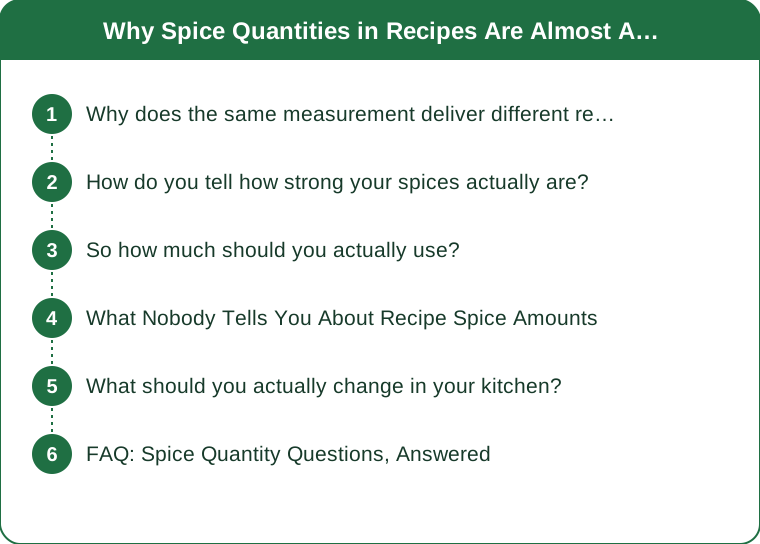
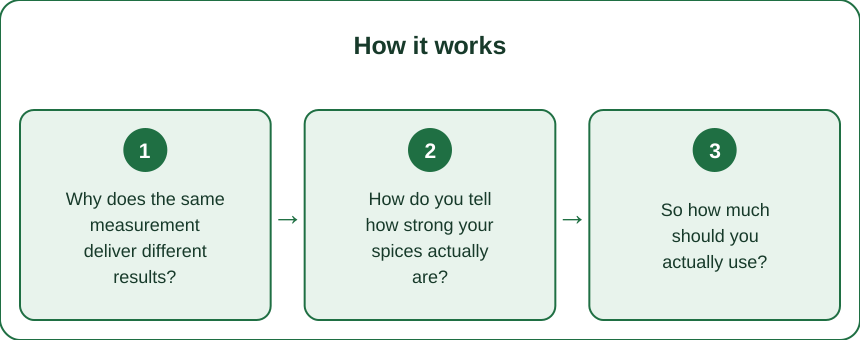
Why does the same measurement deliver different results?
Four variables, none of them printed in the recipe.
Age. Ground spices lose volatile aromatic compounds continuously from the moment they are ground. A jar of ground cumin at twelve months has a fraction of the aroma it had at one month — the flavor does not disappear entirely, but the bright top notes go first and what remains is the duller, more bitter base. Whole spices hold up far longer because the compounds are protected inside intact cell structures.
Grind size. Finely ground spice has vastly more surface area than coarse, which means it releases flavor faster and more completely into a dish. A teaspoon of finely ground black pepper is meaningfully stronger than a teaspoon of coarse. Recipes rarely specify.
Volume versus weight. A teaspoon of paprika and a teaspoon of coriander do not weigh the same, and a packed teaspoon and a level one differ by a significant margin. Whole spices measured by volume vary even more — a teaspoon of whole cumin seeds contains far less material than a teaspoon of the ground version.
Origin and variety. Cinnamon is the most extreme example: cassia is aggressive and sweet-hot, Ceylon is delicate and floral, and recipes almost never say which. The same applies to paprika, chilies, and pepper varieties.
Stack four of those and the honest range is roughly half to double what the recipe intends.
How do you tell how strong your spices actually are?
Two tests, ten seconds each, and they beat the expiration date on the jar every time.
The rub test. Put a pinch in your palm and rub it briskly with the other thumb. The friction and warmth release the volatiles. Then smell it immediately. Fresh spice hits you clearly. Old spice smells faintly of dust and generic warmth.
The color test. Ground spices fade as they age. Paprika goes from bright red toward brick brown, turmeric from vivid yellow toward mustard, ground chili toward dull. Compare against a new jar once and you will recognize it forever.
Rough working timelines, from grinding not from purchase:
- Ground spices: genuinely good for six months, usable to about a year, largely decorative beyond that
- Whole spices: two to four years, sometimes longer
- Dried leafy herbs: the shortest of all, around six months
- Anything stored above the stove: halve every number above
They do not become unsafe — dried spices are too dry to support bacterial growth. They just stop doing their job, which is why the jar that has been there for years is not dangerous, merely pointless.
So how much should you actually use?
Keep the recipe’s ratios and adjust the total. This is the entire technique and it is easier than it sounds.
Ratios are the useful information in a recipe. If it calls for 2 teaspoons cumin, 1 teaspoon coriander, and half a teaspoon cinnamon, the writer is telling you cumin-forward with a coriander backbone and a cinnamon whisper. That relationship is what you want to preserve. The absolute amounts are a guess about your ingredients.
Scale the whole blend by age:
- Freshly ground, within a month: use 75–100% of what the recipe says. Fresh spice is stronger than most recipes assume.
- Ground, three to six months old: use the stated amount.
- Ground, six to twelve months: use 1.25 to 1.5 times.
- Older than a year: replace it. You cannot compensate your way out of it — adding more of a faded spice adds the dull, slightly bitter base notes without the aromatics, which is how dishes become muddy rather than flavorful.
Add in two stages. Put in about 70% at the start with the aromatics, taste near the end, and add the rest if needed. Spice added early integrates; spice added late sits on top — which is exactly why a last-minute correction never quite fixes a flat dish.
And bloom it. Thirty seconds in hot oil before the liquid goes in dissolves the fat-soluble compounds and distributes them through the whole dish. A bloomed half-teaspoon does more than an unbloomed full one.
What Nobody Tells You About Recipe Spice Amounts
Recipe writers deliberately under-spice. Most published recipes are calibrated conservatively, because a reader who finds a dish bland is mildly disappointed and one who finds it overwhelming stops trusting the source. If a recipe from a large publication tastes underseasoned to you, that is often the design rather than your mistake.
Regional recipes assume regional ingredients. A curry recipe written in India assumes spices bought in quantities that turn over in weeks, often ground at a local mill. Following it with supermarket jars from last spring is not the same recipe. This is the single biggest reason home versions of these dishes taste flat compared to restaurant versions.
Salt determines how much spice you taste. This is genuinely underappreciated. An underseasoned dish reads as under-spiced, and people respond by adding more spice, which does not fix it. Salt first, taste, then decide about spice. A remarkable proportion of “needs more cumin” is actually “needs more salt.”
Heat and time change the equation. Long-cooked dishes lose volatile aromatics over hours, which is why braises and slow-cooked stews often need spice added in two stages — some early for depth, some late for aroma. Quick dishes need less because nothing has evaporated.
Fat carries spice. A dish with more fat distributes spice flavor more evenly and needs less of it. A low-fat version of the same recipe genuinely needs more spice to taste equivalent, and this catches people out constantly.
What should you actually change in your kitchen?
Five things, in order of impact.
Buy smaller quantities more often. The large jar is worse value than it looks because you will throw away or, worse, keep using the second half. Buy the small jar of anything you use less than monthly.
Buy whole and grind for the four that matter most. Cumin, coriander, black pepper, and cardamom lose the most from pre-grinding and are easiest to grind at home. A cheap electric coffee grinder kept for spices is one of the highest-return kitchen purchases there is. Whole nutmeg and whole cinnamon sticks are worth it too.
Move them away from the stove. Heat, light, and humidity are the three things that destroy spice, and above the stove has all three. A drawer or a cool cabinet doubles their useful life.
Date the jars. Write the month you opened it on the lid with a marker. Ten seconds, and it removes all the guesswork this article is about.
Taste as you go, and taste the spice itself. Before you add cumin to a dish, put a few grains on your tongue. You will immediately know whether you are working with something potent or something spent, and you can adjust before committing.
One late-summer note: humidity is at its highest right now in most of the US, and humidity is what makes spices clump and lose potency fastest. If your jars have gone solid or clumpy, that is moisture — and it means those spices have been degrading faster than the calendar suggests. It is the right month to audit the rack, not October.
FAQ: Spice Quantity Questions, Answered
Can I substitute ground for whole at the same measurement?
No, and the difference is large. Whole spices measured by volume contain much less material than ground — the general rule is that one teaspoon of whole seeds yields roughly a scant teaspoon to a teaspoon and a quarter of ground, but the flavor delivery is much higher because it is freshly ground. Grind whole spices and then measure, rather than converting.
Does toasting whole spices before grinding change the amount I need?
Toasting intensifies aroma and shifts the flavor toward nutty and deeper notes, so you often need slightly less, and the character is different rather than just stronger. Toast until fragrant — usually 30 to 60 seconds in a dry pan — and stop immediately, since burnt spice is bitter and unfixable.
Is it worth buying spices from a specialty shop instead of the supermarket?
Usually yes, and mostly for turnover rather than quality. A shop that sells spices in bulk moves inventory in weeks rather than the months or years a supermarket jar may sit. You are buying freshness, which is precisely the variable this whole article is about.
TL;DR:
- Recipe amounts assume fresh spice of a specific grind, origin, and regional palate — none of which are printed
- Keep the recipe’s ratios between spices and scale the total by how old your jars actually are
- Rub a pinch in your palm and smell it: that tells you more than any expiration date
- Salt first — a lot of “needs more spice” is really “needs more salt”
- Buy small, grind cumin and coriander yourself, store away from the stove, and date the lids
The recipe is giving you a shape, not a dose. Once you stop treating the teaspoon as a fact, most flat-tasting dishes turn out to be fixable in about thirty seconds.
Keep Reading
This article is for general informational purposes only and is not medical advice. Always consult a qualified health professional for guidance specific to you.