Why Blooming Spices in Oil Changes the Dish More Than Adding More
Quick Answer: Most of the aromatic compounds in dried spices are fat-soluble, not water-soluble. Dropping ground spice into a simmering pot dissolves only a fraction of what’s there. Heating spice in oil for 30 to 60 seconds first — blooming, or tempering — pulls those compounds into the fat, where they spread evenly through the dish. The same quantity of spice tastes two to three times stronger.
You doubled the cumin and the curry still tasted flat. Then you watched someone toss the exact same amount into hot oil for half a minute at the start, and the kitchen smelled like a different building.

What does blooming spices actually do?
It changes the solvent, and the solvent is the whole story.
The compounds that make cumin taste like cumin — cuminaldehyde and its relatives — are lipophilic, meaning they dissolve into fat and not much into water. Same for the curcumin in turmeric, the capsaicin in chili, and most of what’s interesting in coriander, mustard seed, and fennel.
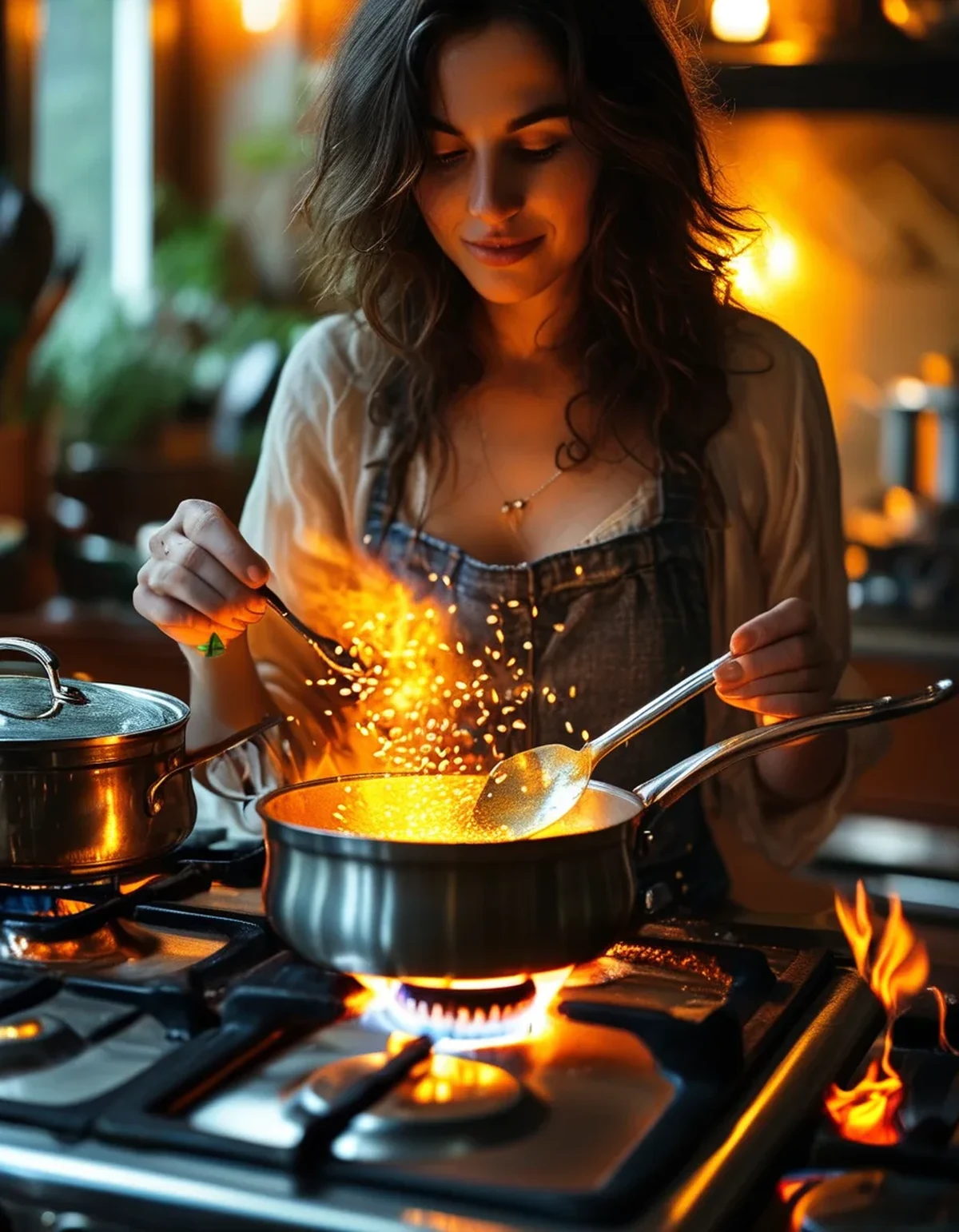
Drop those into a water-based sauce and a large share stays locked in the ground particle, never reaching your tongue. Drop them into 300°F oil and they migrate out within seconds.
Heat does a second job too. Mild roasting triggers Maillard-type reactions in the spice itself, creating new nutty and toasted notes that weren’t in the raw powder at all. That’s why bloomed cumin doesn’t just taste like more cumin — it tastes like a different, rounder ingredient.
Once the compounds are in the oil, they distribute through the entire dish, because fat coats everything. Flavor that stays trapped in a particle only reaches the mouth when you bite that particle.
How long should you bloom spices for?
Shorter than most people think, and it varies by form.
Whole seeds: 30 to 60 seconds in oil over medium heat. Cumin, mustard, fennel, and coriander seeds signal readiness — mustard pops, cumin darkens a shade and smells toasted.
Ground spices: 15 to 30 seconds, maximum. Ground spice has enormous surface area and burns fast. Turmeric and paprika are the most fragile; both go bitter well before they look burnt.
Whole dried chilies: 20 to 40 seconds, turning once. Pull them the moment the color deepens.
The reliable technique is to bloom whole seeds first, then reduce heat before adding ground spices, then add something wet — onions, tomato, stock — within 30 seconds to stop the cooking. The liquid drops the temperature immediately and locks in what you’ve extracted.
The failure mode is walking away. There’s roughly a 15-second window between fragrant and acrid for ground spices. This is not a step you multitask through.
5 Mistakes That Waste Good Spices
1. Adding ground spice to a boiling pot. Water tops out at 212°F and can’t extract fat-soluble compounds. You’re paying for flavor that stays in the powder and goes down the drain.
2. Blooming in oil that’s too hot. Smoking oil scorches ground spice on contact. Shimmering, not smoking — around 300 to 325°F. If you dropped a seed in and it spun violently and darkened instantly, the oil is too hot.
3. Adding all spices at once. Whole seeds need 45 seconds; ground turmeric needs 15. Together, one is undercooked or the other is burnt. Stagger them.
4. Storing above the stove. Heat, light, and steam are the three things that degrade dried spice fastest, and the cabinet over the range delivers all three. A drawer away from the stove roughly doubles useful life.
5. Buying pre-ground in large jars. Ground spice loses meaningful potency within about six months because the volatile oils evaporate from the exposed surface. Whole seeds hold two to three years. A $15 blade grinder pays for itself in one year of cumin.
Which spices actually need blooming?
Not all of them, and knowing which saves you a step.
Bloom these: cumin, coriander, mustard seed, fennel, cardamom, cinnamon stick, whole cloves, turmeric, paprika, chili powder, curry powder, garam masala, black pepper.
Don’t bother: salt-forward blends, dried herbs like oregano and thyme (their compounds are more heat-fragile and they turn dusty), anything containing sugar or milk solids, and finishing spices meant to be raw.
Add near the end instead: delicate ground spice you want bright rather than deep — sumac, za’atar, freshly ground pepper as a finish, and garam masala when it’s being used as a topnote rather than a base.
Many cuisines use both approaches in the same dish deliberately. A base layer bloomed at the start builds depth; a second pinch stirred in at the end restores the volatile aromatics that cooking drove off. Same spice, two jobs, two timings.
If a dish tastes deep but not fragrant, you’re missing the second addition. If it smells great and tastes hollow, you’re missing the first.
Does this work with butter and other fats?
Yes, with adjustments for smoke point.
Ghee is the traditional choice for a reason — the milk solids are already removed, so it holds up to 450°F and adds its own nutty depth. It’s the most forgiving option.
Butter works but burns around 300°F, which overlaps uncomfortably with the blooming range. Use lower heat and a shorter window, or clarify it first.
Neutral oils — grapeseed, canola, refined sunflower — are the safest for high-heat blooming and let the spice dominate.
Olive oil is fine for gentler blooming at moderate heat; extra-virgin’s own flavor competes, which sometimes helps and sometimes muddies.
Coconut oil suits South and Southeast Asian dishes and holds heat well.
The practical rule: the fat has to survive the temperature the spice needs. If you’re blooming whole seeds hard, use something with headroom. If you’re doing a gentle 15-second ground-spice bloom, almost anything works.
And if you’re already sautéing onions in fat, you’ve got the vehicle — just add the spices to that pan for the last minute rather than dumping them into the liquid later.
FAQ: Cooking With Spices, Answered
Can I bloom spices ahead of time and store the oil?
Yes. Spice-infused oil keeps about two weeks refrigerated and is genuinely convenient. Do not include fresh garlic, herbs, or anything with water content — low-acid, low-oxygen storage of fresh ingredients in oil carries a botulism risk. Dried spices alone are fine.
Why does my turmeric taste bitter?
Almost always overcooked. Turmeric has a very short window and goes bitter within seconds of its peak. Add it last among the ground spices, keep it to about 10 seconds, and get liquid in the pan immediately.
Do I need to toast whole spices before grinding them?
It helps but it’s a separate step from blooming. Dry-toasting in a pan for a minute drives off residual moisture and deepens flavor before grinding. If you’re going to bloom the ground result in oil anyway, dry-toasting first is a refinement rather than a requirement.
TL;DR:
- Most spice flavor compounds are fat-soluble, so water-based cooking extracts only part of them.
- Bloom whole seeds 30–60 seconds, ground spices 15–30, then add liquid to stop the cooking.
- Ground turmeric and paprika burn fastest — add them last and briefly.
- Buy whole where you can; ground spice loses real potency in about six months.
The next time a dish tastes like it needs more spice, try using the same amount thirty seconds earlier in a tablespoon of hot fat. It’s the cheapest upgrade in the kitchen, and it explains why the same recipe tastes different in someone else’s hands.
Keep Reading
This article is for general informational purposes only and is not medical advice. Always consult a qualified health professional for guidance specific to you.