Why Adding More Spice at the End Never Fixes a Flat Dish
Quick Answer: Ground spices need fat and heat to release their flavour compounds - most of the aroma molecules in spices are fat-soluble, not water-soluble. Stirred raw into a finished dish, they hydrate but never bloom, so you get texture and dust rather than flavour. Flat food is also more often short of salt, acid, or fat than of spice. Check salt, then acid, then fat - and if you do add spice, bloom it in hot oil first.
Raw spice added at the end does not dissolve into the dish.
It sits in it.
Why does raw ground spice fail at the end of cooking?
Because the compounds you want are locked in a form that needs fat and heat to get out.
Most spice aromatics are fat-soluble. The molecules responsible for the flavour of cumin, coriander, paprika, chilli, and turmeric dissolve readily into oil and poorly into water. A watery sauce simply cannot extract them.
Heat drives the release. Warming spices in fat - blooming - opens up the compounds and creates new ones through gentle browning. Thirty seconds in hot oil produces more flavour than five minutes stirred into a simmering liquid.
Raw ground spice also has a specific dusty quality. Untoasted, unbloomed powder tastes chalky and slightly bitter, and it coats the mouth. This is what people are tasting when they say a curry tastes powdery.
And it thickens without flavouring. Adding several spoonfuls of powder to a finished sauce alters the texture noticeably while adding relatively little taste, which makes the dish worse on both counts.
There is an exception worth knowing. Finishing spices designed for raw use - sumac, za’atar, flaky chilli, freshly ground black pepper, garam masala - are formulated or ground to work without blooming, and they genuinely do work at the end.
Everything else needs the fat and the heat first.
What is actually missing when food tastes flat?
Usually one of three things, and spice is fourth on the list.
Salt, most of the time. Salt does not just add saltiness - it suppresses bitterness and amplifies almost every other flavour present. A dish that tastes vague and muted is under-salted far more often than it is under-spiced. Add a pinch, stir, and taste again before doing anything else.
Acid, second most often. Lemon, vinegar, yoghurt, tamarind, tomato. Acid provides contrast, and without contrast everything reads as a single dull note. A dish that is well-salted and still boring is almost always short of acid.
Fat, third. Fat carries flavour to your palate and gives a sauce body. A low-fat dish tastes thinner regardless of seasoning - a knob of butter, a swirl of oil, or a spoon of cream at the end can transform it.
Then, if all three are handled, consider spice. By this point most dishes no longer need it.
Test them in order and taste between each. Salt, acid, fat, spice - it takes ninety seconds and it prevents the most common cooking mistake there is.
And sweetness deserves a mention. A small pinch of sugar in a tomato or chilli dish balances acidity and rounds the whole thing, which is a fix that surprises people every time.
How do you add spice at the end when you genuinely need to?
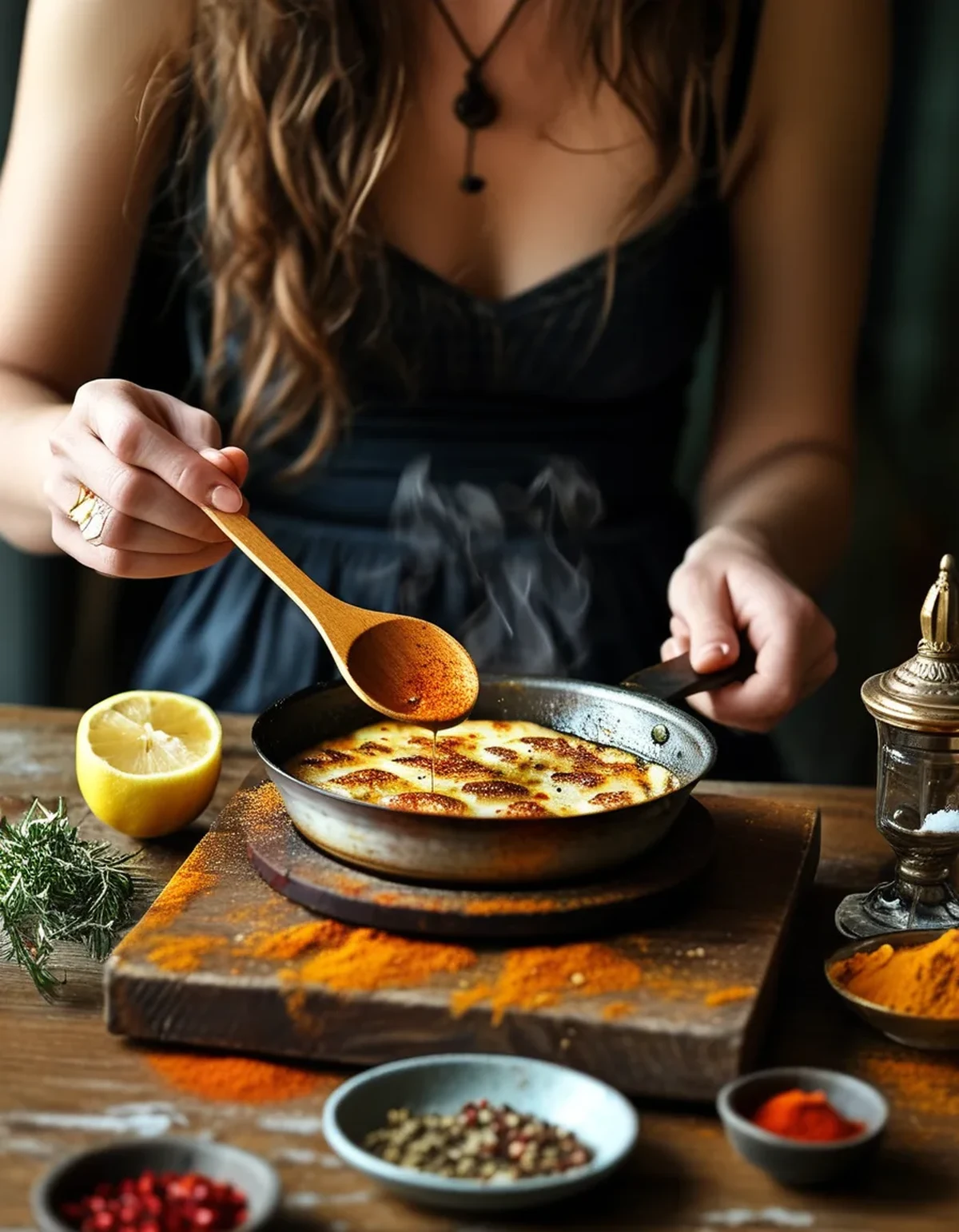
By making a small amount of tempered spice oil in a separate pan - which takes ninety seconds and works every time.
Heat a tablespoon of oil or ghee in a small pan over medium heat. Not smoking. Too hot burns spices in seconds and burnt spice is bitter and unfixable.
Add whole spices first if using them, and wait for them to sizzle and become fragrant - usually under a minute.
Add ground spices and stir for fifteen to thirty seconds only. They burn far faster than whole spices. The moment it smells strongly, it is done.
Pour the whole thing into your dish and stir. This is a genuine technique used across many cuisines specifically for finishing, and it delivers the spice flavour that stirring in powder cannot.
Add aromatics to the oil if the dish needs lifting further. Sliced garlic, curry leaves, dried chilli, or mustard seeds in the same pan add a whole extra dimension.
And use less than you think. Bloomed spice is dramatically more potent than raw powder - roughly half the quantity gives more flavour, and over-doing it is the common error once people learn this.
5 Mistakes Everyone Makes When a Dish Tastes Flat
Reaching for more spice before checking salt. The default move, and wrong most of the time. Salt first, always - it costs nothing and it solves the problem more often than anything else.
Adding powder directly to a simmering liquid. No fat contact, no heat exposure in oil, so no release. You get thickening and dust.
Burning the spices in a panic. Blooming works, but the window is short. Burnt spice is bitter and cannot be corrected - if it goes dark and smells sharp, start the tempering again.
Ignoring acid entirely. Many home cooks season with salt and spice only, and never with acid. A wedge of lemon on the side of the plate rescues an enormous number of dinners.
Using spices that are years old. Ground spices lose their volatile aromatics steadily and are noticeably weaker after about six months to a year. They are not unsafe, they are just quiet - and no amount added at the end will fix a jar that has nothing left in it.
And the bonus mistake: tasting only once, at the end. Seasoning is a process across the cook, not a decision at the finish. Taste at three points and the final adjustment becomes small.
FAQ: Fixing Flat Food, Answered
How do I know if it needs salt or acid?
Taste a spoonful, add a few grains of salt to it on the spoon, and taste again. Do the same on another spoonful with a drop of lemon juice. Whichever improves it more is what the pot needs - it takes thirty seconds and removes the guessing.
Can I bloom spices in butter instead of oil?
Yes, and it tastes excellent, but butter burns at a lower temperature than most oils. Use medium-low heat and keep it moving, or use ghee, which handles the heat far better and is traditional for exactly this reason.
Why do my spices taste stronger the next day?
Time lets the fat-soluble compounds continue dispersing through the dish, and the flavours redistribute and merge. This is a real effect, not imagination - which is why many spiced dishes are genuinely better reheated.
TL;DR:
- Ground spice aromatics are fat-soluble - stirred raw into a finished dish they never release, and you taste dust.
- Flat food is usually short of salt, then acid, then fat. Check all three before reaching for spice.
- To add spice late, bloom it in a tablespoon of hot oil for fifteen to thirty seconds and pour it in.
- Bloomed spice is much stronger - use about half what you would stir in raw.
- Ground spices older than about a year have little left to give, regardless of quantity.
Next flat dinner, do the two-spoon test: salt on one, lemon on the other. It answers the question in thirty seconds.
Keep Reading
This article is for general informational purposes only and is not medical advice. Always consult a qualified health professional for guidance specific to you.