Why Ground Spices Taste Flat Unless They're Bloomed in Oil First
Adding ground spices straight into a simmering sauce feels like the natural move, but a lot of their actual flavor compounds only fully release when bloomed in hot oil first, which is why the same spice measured the same amount can taste noticeably flatter depending on how it enters the dish.

Why Many Spice Compounds Are Fat-Soluble Rather Than Water-Soluble
The solubility mechanism: the many-flavor-and-aroma-compounds-in-spices-dissolve-into-fat-more-readily-than-into-water (the specific chemical makeup of a lot of spice compounds favoring oil as the carrier that actually extracts and distributes their flavor — the compounds-dissolve-better-in-fat), the the-adding-spice-directly-to-a-water-based-liquid-like-broth-or-sauce-extracts-only-part-of-the-available-flavor (the a watery cooking liquid failing to fully unlock everything the spice actually contains — the water-based-liquid-extracts-only-partial-flavor), the the-heat-applied-through-oil-also-releases-aromatic-compounds-that-stay-locked-at-lower-temperatures (the the combination of fat and heat specifically triggering release that neither alone fully achieves — the heat-plus-oil-releases-aromatics), and the reframe (a flat-tasting spice often reflecting an extraction problem based on what it was added to, not a problem with the spice’s actual quality or freshness).

The Specific Bloom Timing That Unlocks the Most Flavor
How to actually do it: the add-ground-spice-to-hot-but-not-smoking-oil-before-adding-liquid-ingredients (the timing the spice’s contact with oil before any water-based ingredient dilutes the effect — the spice-into-oil-before-liquid), the the-bloom-for-roughly-thirty-to-sixty-seconds-while-stirring-constantly (the a short, active window being enough to release the compounds without burning them — the thirty-to-sixty-second-bloom-window), the the-watch-for-a-noticeably-stronger-aroma-as-the-signal-its-ready (the a clear, sensory cue confirming the bloom rather than relying on a fixed clock alone — the aroma-signals-readiness), and the frame (adding ground spice to hot oil before any liquid, blooming for roughly thirty to sixty seconds while stirring, and using the aroma as the actual signal — a specific, short window that makes the difference).
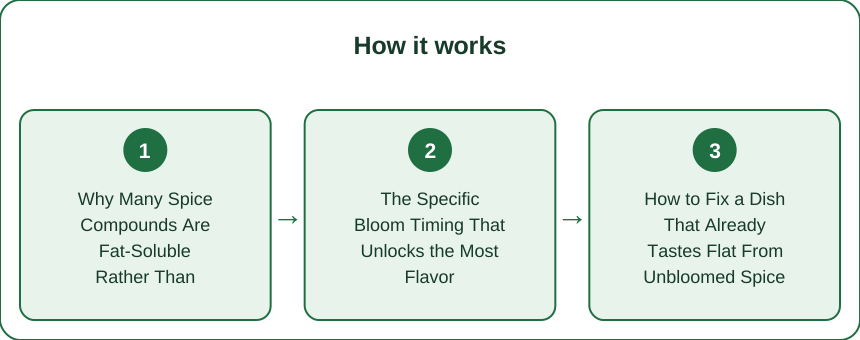
How to Fix a Dish That Already Tastes Flat From Unbloomed Spice
The salvage steps: the heat-a-small-separate-amount-of-oil-and-bloom-additional-spice-in-it (the creating a quick bloomed addition on the side rather than trying to fix the compound already in the dish — the bloom-separately-and-add), the the-stir-the-freshly-bloomed-spice-oil-into-the-existing-dish-near-the-end (the adding the concentrated flavor late enough to actually taste distinct rather than getting diluted again — the stir-in-near-the-end), the the-taste-and-adjust-in-small-increments-rather-than-adding-a-large-amount-at-once (the correcting gradually to avoid overcorrecting into an overly strong or bitter result — the adjust-in-small-increments), and the frame (blooming a small separate batch of spice in oil and stirring it in near the end, adjusting gradually — a fix that salvages a flat dish without starting over).
Ground spice added straight into a simmering sauce can taste flat because many of its flavor and aroma compounds are fat-soluble rather than water-soluble, meaning a watery cooking liquid only extracts part of what the spice actually contains, while heat applied through oil releases aromatics that stay locked at lower, water-based temperatures. The fix is adding ground spice to hot but not smoking oil before any liquid ingredient goes in, blooming it for roughly thirty to sixty seconds while stirring constantly and watching for a noticeably stronger aroma as the signal it’s ready. If a dish already tastes flat, heat a small separate amount of oil, bloom additional spice in it, and stir that freshly bloomed spice oil into the dish near the end, adjusting in small increments rather than one large addition to avoid overcorrecting.
Keep Reading
This article is for general informational purposes only and is not medical advice. Always consult a qualified health professional for guidance specific to you.