How to Fix a Dish You Over-Spiced
Quick Answer: Diagnose first. Chili heat responds to fat and dairy — cream, yogurt, coconut milk — because capsaicin is fat-soluble and water-based additions just spread it. Too much salt responds to acid and bulk, not to potato. Bitter over-spicing from burnt or over-toasted spices responds to a little fat plus a little sweetness. And an overwhelming single spice usually needs dilution rather than counteracting. Adding cream to an over-salted dish or sugar to a chili-heavy one both make things worse.
You added the chili powder twice because you got distracted, and now dinner is somewhere between challenging and inedible.
The internet will immediately tell you to add a potato. That advice is wrong for almost every situation it is offered in. The fix depends entirely on which kind of too much you have, and the mistake in the fourth section is the one that turns a rescuable dish into a lost one.

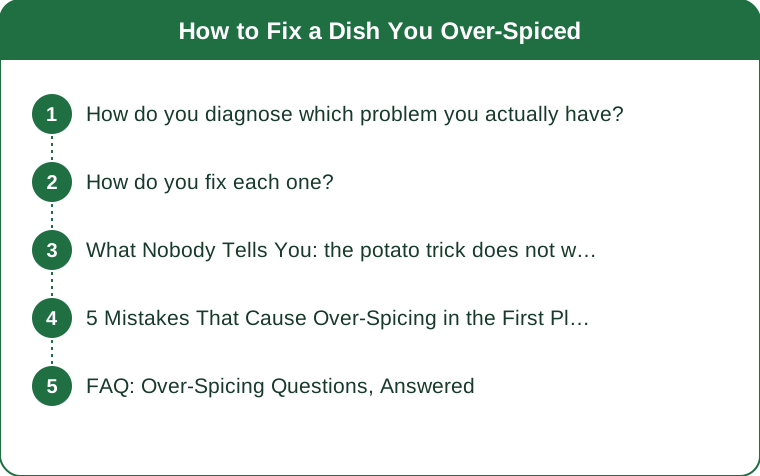
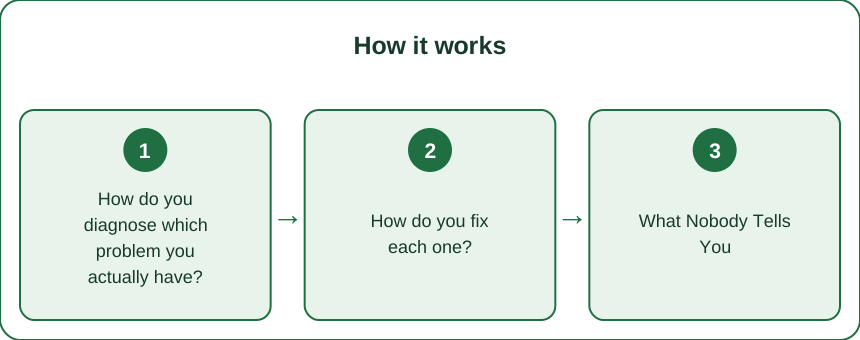
How do you diagnose which problem you actually have?
Taste carefully and locate the sensation, because the four failure modes feel different.
Heat is a burning sensation, felt on the tongue, lips, and back of the throat, and it builds and lingers after you swallow. It is not a taste at all — capsaicin activates heat receptors directly.
Salt hits immediately, front of the tongue, and makes you want water. It flattens other flavors rather than covering them.
Bitterness appears at the back of the tongue and lingers as an unpleasant edge. It usually comes from burnt spices, over-toasted seeds, over-blooming in oil, or too much of something like fenugreek, turmeric, or ground cumin.
Single-spice dominance is when one flavor is simply too loud — the dish tastes of cinnamon or clove or cumin rather than of itself. There is no burn and no bitterness, just imbalance.
Take a spoonful, wait, and pay attention to where and when the problem registers. Thirty seconds of diagnosis saves you from adding something that makes it worse, which is the actual risk here.
How do you fix each one?
Too much chili heat
Fat and dairy first. Capsaicin dissolves in fat, so cream, full-fat yogurt, coconut milk, butter, cheese, or a swirl of oil physically carry it away from your receptors. This is why raita accompanies hot curries and why milk beats water.
Add gradually — a quarter cup of coconut milk or a couple of tablespoons of yogurt into a family-sized pot, stir, taste, repeat. Temper yogurt with a little hot liquid before adding to prevent curdling.
Acid helps as a secondary measure. Lime, lemon, vinegar, or tamarind distracts the palate and adds a competing sensation. It will not remove heat but it makes the dish more balanced.
Sugar helps a little, but only a little — half a teaspoon at a time. A hot dish that is also sweet is usually worse than a hot one.
Bulk works if you have the ingredients. More tomatoes, more stock, more vegetables, more of the base. This is the most reliable fix and the one that requires the most cooking time.
Too much salt
Acid is the first move. Lemon juice or vinegar, added a teaspoon at a time, genuinely reduces the perception of saltiness. This is the single most effective quick fix and almost nobody reaches for it.
Add unsalted bulk. More liquid, more vegetables, more rice or pasta served alongside. Splitting the dish and making a second unsalted half to combine is inelegant and it works.
Dairy helps in dishes that suit it — cream or unsalted butter — by adding fat and volume.
Sugar in small amounts masks salt to some degree. Use sparingly.
Bitterness
Bitterness is the hardest to fix and prevention matters most. A small amount of fat plus a small amount of sweetness is the standard approach — a knob of butter and a teaspoon of honey or sugar. A pinch of salt also suppresses bitterness perception, which is counterintuitive but real.
If the bitterness is from genuinely burnt spices, and it is strong, the honest answer is that it may not be salvageable. Burnt is a flavor that spreads through everything.
One spice dominating
Dilution is the only real answer. Make more of the base and combine. Alternatively, lean into it by adding complementary spices that give the dominant one company — if it tastes only of cumin, adding coriander and a warm spice can turn a mistake into a deliberate profile.

What Nobody Tells You: the potato trick does not work
It is the most repeated kitchen advice on this subject, and it has been tested and does not do what people think.
A potato absorbs salted liquid; it does not selectively absorb salt. When you drop a raw potato into an over-salted soup and remove it later, you have taken out a potato’s worth of salty liquid — which reduces the total quantity of the dish slightly, but leaves the concentration essentially unchanged. The dish is exactly as salty per spoonful as it was.
You could achieve the identical effect by removing a ladleful of soup, and it would be faster.
Two other pieces of common advice worth correcting:
Water does not fix heat, and it can spread it. Capsaicin is not water-soluble. Adding water dilutes everything else in the dish while distributing the capsaicin around, which is why the result is often blander and still hot — the worst combination.
Rinsing does not work for anything except surface seasoning. Once a spice has been bloomed in oil or simmered into a sauce, it is integrated. Rinsing a piece of over-seasoned meat before it goes into liquid is a genuine fix; rinsing anything already cooked in sauce is not.
The one thing that reliably works across all four problems is the least satisfying: make more of the unseasoned base and combine. It takes longer and it uses more ingredients, and it is the only intervention that changes concentration rather than perception.
5 Mistakes That Cause Over-Spicing in the First Place
1. Adding ground spices at the same time as whole ones. Ground spices release fast and burn fast; whole ones need time. Adding them together means one is burnt by the time the other is ready — the most common source of bitterness.
2. Blooming for too long. Spices in hot oil go from fragrant to bitter in about 15 seconds. Stir constantly, and pull them the moment you can smell them clearly. If they darken, start again — that bitterness will not cook out.
3. Seasoning to taste while the dish is still reducing. A sauce that is correctly seasoned at the start of a 40-minute reduction will be badly over-salted at the end. Season lightly early, adjust at the finish.
4. Trusting a recipe’s chili quantity across different chilies. Heat varies enormously between varieties and even between batches of the same one. Start with half of what a recipe calls for and add at the end.
5. Adding salted ingredients without accounting for them. Stock, soy sauce, canned beans, olives, capers, cured meat, and most cheeses carry substantial salt. Season last in any dish containing them.
FAQ: Over-Spicing Questions, Answered
Can I fix it the next day instead?
Sometimes it fixes itself. Flavors continue to integrate overnight and a dish that was aggressively spiced can settle into balance in the fridge. Heat in particular often reads as less sharp on day two. It is worth tasting again before committing to a rescue.
Does adding dairy work for all types of heat?
It works for capsaicin heat from chilies. It does not work as well for the sharp pungency of black pepper, mustard, horseradish, or wasabi, which come from different compounds. For those, dilution and acid are the more effective tools.
How do I avoid this without under-seasoning everything?
Season in layers and taste at each one. Add half the spice at the start of cooking, then adjust in the final ten minutes when the dish is close to its finished concentration. You end up with more depth than a single large addition would give you, and the correction point comes before the mistake is locked in.
TL;DR:
- Diagnose first: heat burns and lingers, salt hits the front of the tongue, bitterness sits at the back, dominance is just imbalance.
- Heat needs fat and dairy; salt needs acid and unsalted bulk; bitterness needs fat plus a touch of sweetness; dominance needs dilution.
- The potato trick does not work — it removes salty liquid, not salt.
- Prevent it by seasoning in layers, pulling bloomed spices at 15 seconds, and adjusting at the end of cooking.
Taste, locate the problem, then reach for the right jar. The wrong correction is what turns a fixable dinner into takeaway.
Keep Reading
This article is for general informational purposes only and is not medical advice. Always consult a qualified health professional for guidance specific to you.